
Sonderegger pine
Pinus sondereggeri
Description
Growing requirements
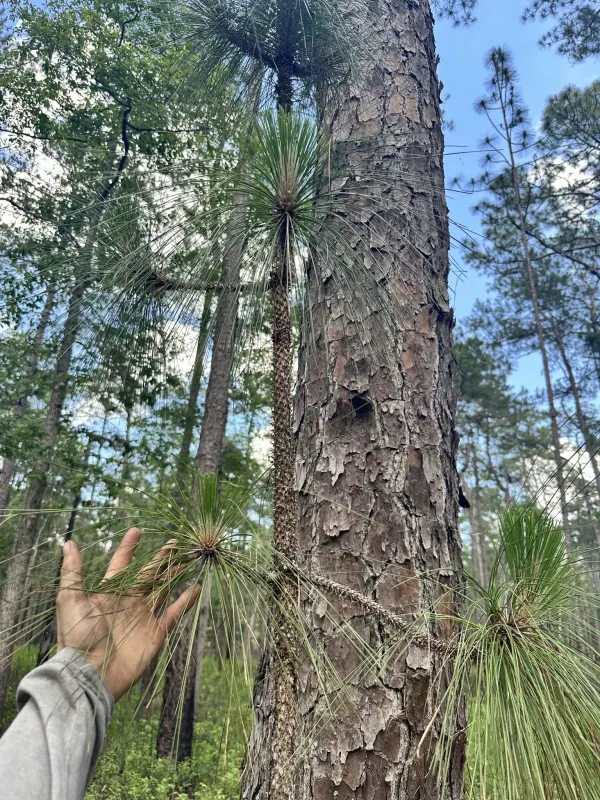
Sonderegger pine (Pinus × sondereggeri) is a natural hybrid between loblolly pine (Pinus taeda) and longleaf pine (Pinus palustris). Belonging to the Pinaceae family, it is recognized for its superior growth rate and vigor compared to its parent species.
The native distribution of this hybrid occurs in the southeastern United States, where the natural ranges of the loblolly and longleaf pines overlap. It thrives in well-drained, sandy or loamy soils that provide excellent air permeability for the root system.
As a highly shade-intolerant species, it requires full sunlight to achieve its maximum potential for height and diameter growth. It is adapted to mild climates with long growing seasons and well-distributed rainfall throughout the year.
Successful silviculture of Sonderegger pine depends on proper site preparation, including managing competition from understory vegetation during the initial establishment phase. Soil acidity should be maintained at a slightly acidic level to optimize nutrient uptake.
Maintenance involves thinning operations to manage stand density as the trees mature. Proper spacing ensures that individual trees have adequate access to resources, which prevents competition-related stress and promotes healthier, faster-growing timber stands.
Yield
The primary economic focus for Sonderegger pine is timber production for construction, paper manufacturing, and various wood-based industries. Its combination of rapid growth and straight-stem characteristics makes it highly sought after by foresters.
By producing larger volumes of wood per hectare in a shorter timeframe, it offers significant advantages over pure longleaf pine plantations. The wood density is generally high, meeting the requirements for heavy-duty structural lumber.
Main diseases and pests
The most significant pathological threat to this hybrid is brown spot needle blight, caused by the fungus Scirrhia acicola. This disease can severely impact sapling development, causing premature needle cast and significant stunting of growth.
Insect pests, specifically the southern pine beetle (Dendroctonus frontalis), pose a constant threat to mature stands. Sustainable management practices, including proper thinning and the removal of stressed or infested trees, are essential to minimize damage and ensure stand vitality.