
Finnish spruce
Picea fennica
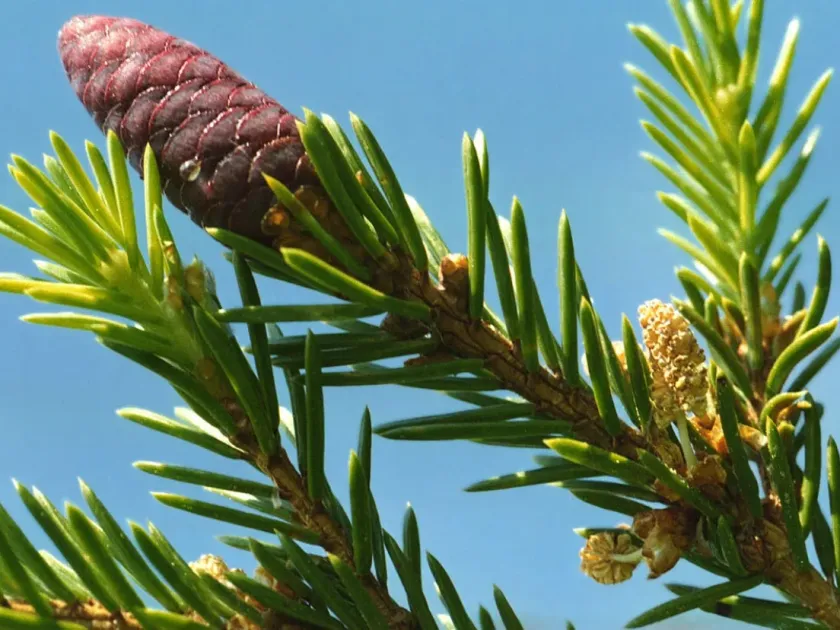
Description
Growing requirements
The Finnish spruce (Picea fennica) is a member of the Pinaceae family. It is a taxonomically complex species, generally considered a natural hybrid or a regional variety that bridges the characteristics of Norway spruce and Siberian spruce.
It is natively found across the northern and eastern parts of Europe, including Finland and Russia. The species is well-adapted to continental climates, characterized by long, snowy winters and relatively cool, short summers.
Regarding soil requirements, this species thrives on well-drained, nutrient-rich loams. It does not tolerate prolonged waterlogging, which can cause root asphyxiation; therefore, selecting sites with good natural drainage or implementing artificial drainage is essential for healthy growth.
Silvicultural practices involve careful selection of planting density. For commercial forestry, maintaining an appropriate spacing is crucial to ensure that the trees develop straight trunks and self-prune their lower branches effectively, which enhances the quality of the harvested timber.
In terms of light, the Finnish spruce is shade-tolerant in its early years, often benefiting from the protection of a canopy. As the trees mature, they require consistent access to sunlight to maximize biomass production and overall forest productivity.
Main diseases and pests
Forest health management for Picea fennica focuses heavily on mitigating fungal diseases such as spruce needle cast. These pathogens thrive in high-humidity environments, making proper forest ventilation and thinning operations vital for disease prevention.
Bark beetles represent one of the most significant entomological threats. These insects often target trees that are already stressed by drought or environmental factors, potentially leading to widespread forest damage if not controlled by timely sanitary logging.
Root rot pathogens, including Heterobasidion species, pose a long-term threat to stand viability. These fungi can spread through root contacts between adjacent trees, necessitating careful management of stumps after harvest and the maintenance of diverse tree age structures.
Abiotic factors, such as late spring frosts, can damage the tender terminal shoots of young trees. While the species is frost-hardy, extreme fluctuations in temperature during the early growth season can still negatively affect the vigor of young plantations.
Integrated pest management, including the use of pheromone monitoring and strict sanitation rules, is the standard approach to maintaining healthy stands. Minimizing physical damage to standing trees during logging operations is also essential to prevent fungal and insect colonization.