
Table Mountain pine
Pinus pungens
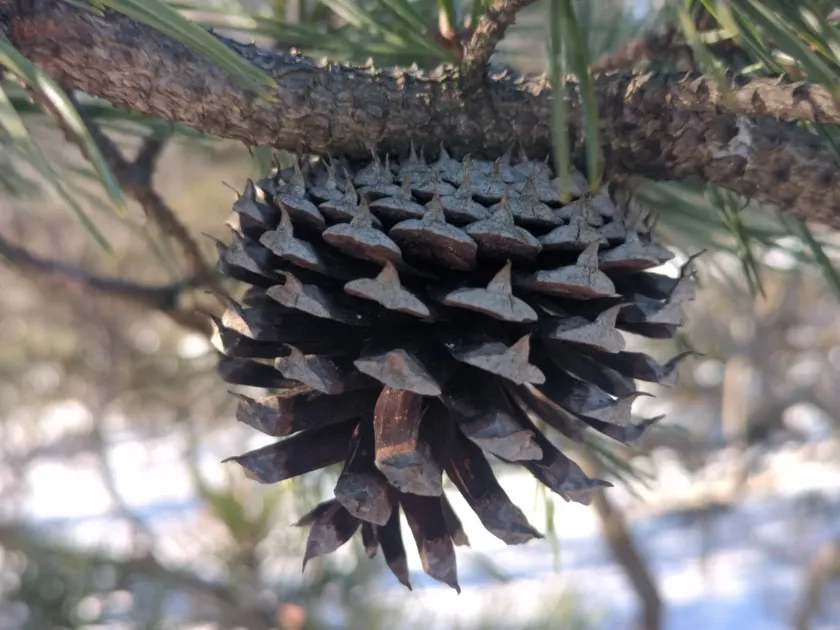
Description
Growing requirements
The Table Mountain pine (Pinus pungens) is a member of the Pinaceae family, native to the Appalachian Mountains in the United States. This species is well-known for its resilience in harsh, mountainous environments.
The species thrives in dry, well-drained, and nutrient-poor soils. It is particularly well-adapted to rocky ridges and steep slopes where water drainage is rapid and constant.
It requires full sun exposure for optimal growth and architectural development. Insufficient light levels often result in an irregular, sparse canopy and reduced vigor in young trees.
This tree is highly cold-hardy, capable of surviving sub-zero temperatures and mountain winds. It is an excellent choice for ornamental or reforestation projects in areas with challenging climate conditions.
Agronomic management should prioritize early establishment. Proper planting techniques, including the avoidance of overly rich organic amendments, help the tree maintain its natural growth habit.
Main diseases and pests
Pinus pungens is susceptible to various rust fungi that can affect its needles and shoots. Monitoring for early signs of fungal growth is a critical part of professional maintenance.
Bark beetles represent a significant threat, especially when trees are stressed by prolonged drought. Maintaining tree vigor through proper site selection is the best preventive strategy.
Sanitation practices, such as the removal of dead or dying branches, are necessary to limit the spread of pathogens within a grove or landscape.
Root rot, specifically Phytophthora, can become an issue if the soil remains waterlogged for extended periods. Ensuring superior drainage is the primary defense against this condition.
Regular inspection of the root collar and lower stem for signs of resinosis or boring holes is recommended for maintaining long-term tree health and structural integrity.