
Tropical pine
Pinus tropicalis
Description
Growing requirements
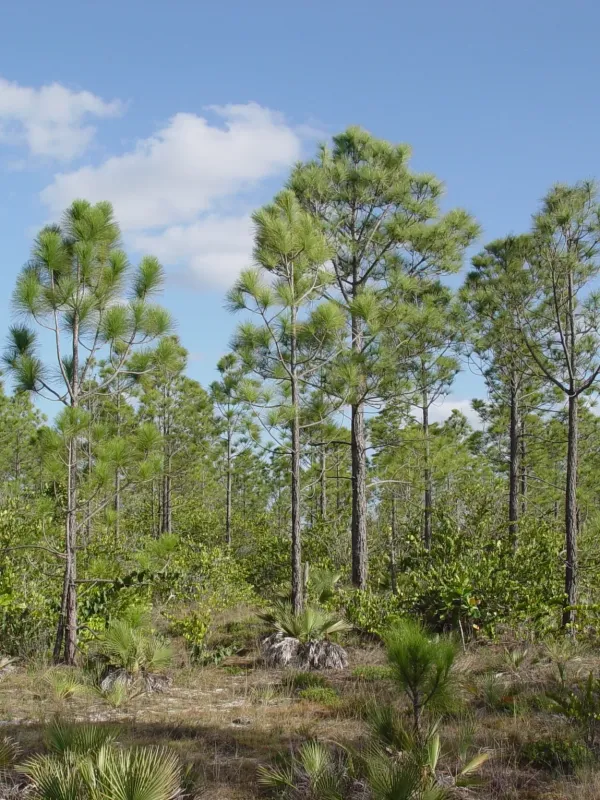
Tropical pine (Pinus tropicalis) is a conifer species belonging to the Pinaceae family, native exclusively to western Cuba and the Isle of Youth.
This species thrives in tropical environments, showing remarkable adaptation to climates characterized by distinct wet and dry seasons.
It prefers nutrient-poor, acidic, and sandy soils, often growing in savannas and open forest formations where other trees struggle to establish.
The tree requires full sunlight for optimal growth; therefore, shading from competing vegetation can significantly stunt the development of seedlings.
Its physiological profile includes a high degree of drought tolerance, which is critical for survival in its endemic range on the Cuban landscape.
Yield
The primary economic use of Tropical pine is the production of high-quality timber for local construction and woodworking industries.
The wood is known for its durability and structural strength, making it suitable for furniture manufacturing and various agricultural building purposes.
Beyond timber production, the species is vital for ecosystem restoration, helping to prevent soil erosion in degraded terrain and mountainous areas.
Silvicultural management focuses on maintaining appropriate spacing to promote straight bole growth and high biomass yield for sustainable harvest.
Conservation efforts are integrated with forestry practices to ensure that timber extraction does not compromise the natural population of this endemic pine.
Main diseases and pests
The conservation status of Pinus tropicalis is influenced by habitat loss and fragmentation driven by agricultural expansion and land development.
Seedlings are susceptible to various pests and insect infestations that can affect needle health and limit the establishment of new plantations.
Root rot caused by fungal pathogens remains a significant concern in nursery environments, particularly where drainage management is suboptimal.
Competition from invasive plant species poses a constant threat, as these weeds can outcompete young pines for light, water, and soil nutrients.
While adult trees are naturally fire-adapted, excessive fire frequency or intensity can impede natural regeneration and damage sensitive growth stages.