
Purple cone spruce
Picea purpurea
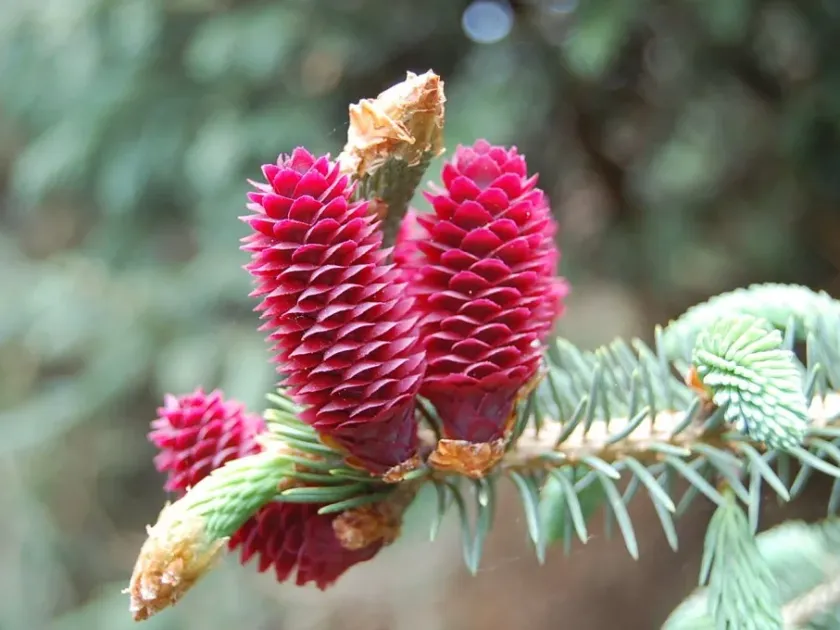
Description
Growing requirements
Purple cone spruce (Picea purpurea) is a member of the Pinaceae family. It is native to the high-altitude regions of western China, specifically found in the mountains of Sichuan and Qinghai provinces.
This coniferous species is known for its adaptation to subalpine environments, thriving in cool climates where it can endure harsh winters and significant temperature fluctuations.
When selecting a planting site, it is crucial to ensure well-drained soil. The ideal medium is a slightly acidic, moist, and fertile loam that replicates the natural mountain soil conditions of its origin.
The plant demonstrates a preference for full sun or light partial shade. In residential landscapes, it should be protected from harsh, drying winds that can cause browning of the needles, especially during early spring.
Consistent moisture is required for the establishment of young trees. However, once mature, the root system is relatively hardy, provided the soil structure allows for adequate oxygenation and drainage.
Main diseases and pests
Fungal pathogens are the most significant threat to Picea purpurea. Diseases like needle cast can cause defoliation, particularly in areas with high humidity and poor air circulation.
Root rot caused by Phytophthora species is a critical issue that occurs when trees are planted in heavy, waterlogged soils, making soil preparation a top priority.
Pests such as the spruce aphid and spider mites are frequent invaders. They feed on the sap of the needles, leading to chlorosis and potential dieback if left unchecked.
Bark beetles can be devastating to mature spruce trees, often targeting those already weakened by drought, environmental stress, or mechanical damage to the trunk.
Regular maintenance practices, including the removal of infected plant debris and timely application of specific horticultural oils or systemic insecticides, are necessary to ensure the tree remains healthy.