
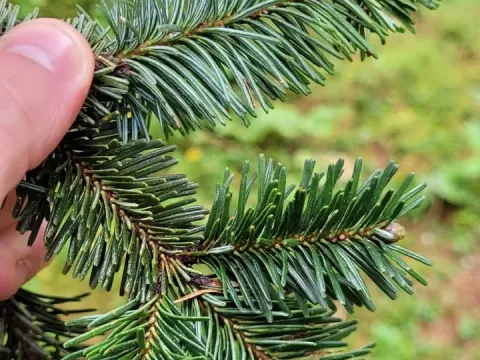
Hickel's fir
Abies hickelii
Hickel's fir (Abies hickelii) is a rare coniferous tree species belonging to the Pinaceae family. It is native to the high-altitude cloud forests of southern Mexico, primarily found in the states of Oaxaca, Guerrero, and Chiapas.
What the section contains
Hickel's fir
The tree thrives in cool, humid environments with frequent mist and cloud cover. Its ecological niche is strictly defined by the montane cloud forest belt, where temperatures remain relatively stable and moisture levels are consistently high.
Cultivation requires well-drained, acidic to neutral soils that are rich in organic matter. Proper aeration is crucial; stagnant water leads to root rot and failure, making drainage the most critical factor in successful site selection.
Botanically, it is recognized by its dense, dark green foliage and erect, cylindrical cones. The tree maintains a symmetrical, conical shape, which makes it aesthetically appealing for botanical gardens focusing on high-altitude flora.
Due to its scarcity, the commercial use of Hickel's fir is minimal. However, it is an essential subject for conservation programs aimed at protecting rare Mexican conifers from the impacts of habitat destruction and warming temperatures.
The primary threats to Hickel's fir are habitat loss and climate change. The destruction of cloud forests for agricultural expansion has fragmented populations, significantly limiting the tree's natural ability to reproduce and spread.
Pathogenic fungi, particularly those affecting needles and roots, can cause significant damage in humid conditions if the plants are stressed by drought or poor air circulation.
Pests such as aphids and various bark beetles pose a risk to the health of the trees, especially when individual specimens are already compromised by environmental stressors.
Climate change poses a severe long-term threat as the specific elevation levels required for the survival of the cloud forest migrate upwards, eventually running out of mountain space.
Effective management and protection require strict adherence to ecological protocols, including the monitoring of soil humidity and the prevention of introducing alien pathogens into the forest ecosystem.