
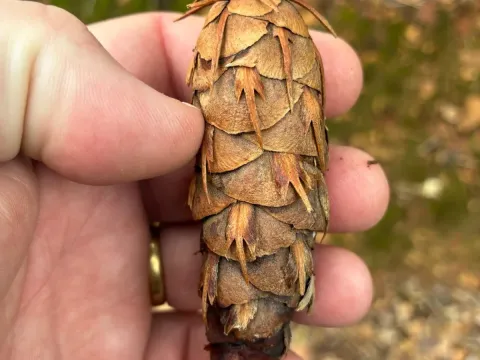
Douglas fir
Pseudotsuga Carr.
Sowing of Douglas fir seeds is typically initiated in early spring following a period of cold stratification lasting between four to eight weeks. Proper stratification is essential to break embryo dormancy and ensure uniform germination across the seed lot.
What the section contains

Douglas fir
Seeds should be sown in well-draining, sterile growing media at a shallow depth of approximately 1 centimeter. Maintaining consistent moisture levels without waterlogging is crucial during the germination phase, which usually lasts about three to six weeks.
In forest nursery management, precision seeding techniques are employed to optimize seedling density and reduce competition for light and nutrients. Ensuring good air circulation within the seedbed is vital to prevent damping-off diseases during the early development stage.
Once seedlings have reached an appropriate size, usually after one or two growing seasons, they are moved to transplant beds. This stage allows for the development of a robust root system before the trees are outplanted to their permanent forest sites.
Care must be taken during the lifting and transplanting process to protect delicate root hairs, as the species is sensitive to root disturbance. Timing this operation during the dormant season significantly improves survival rates.
Douglas fir thrives in deep, fertile, and well-drained soils. It exhibits a strong preference for slightly acidic to neutral soil conditions and performs best when there is adequate moisture throughout the growing season.
Climatic requirements involve a temperate maritime or continental climate with sufficient annual rainfall. While the species is somewhat drought-tolerant once established, young trees require supplemental irrigation to survive dry spells.
Light exposure is a critical factor; while Douglas fir is moderately shade-tolerant during its juvenile stage, it requires full sunlight to achieve maximum growth potential and crown development as it matures.
Protection from extreme wind is important, particularly in exposed locations where the species' shallow root system may be prone to windthrow. Proper site selection and initial spacing help mitigate these environmental risks.
Nutrient management should focus on maintaining balanced soil fertility. Excessive nitrogen fertilization can lead to overly rapid growth, resulting in weak stems that are more susceptible to winter injury and fungal infections.
Major fungal diseases affecting Douglas fir include needle cast and various cankers caused by pathogens such as Phomopsis and Phoma. These infections can lead to significant needle loss and branch dieback if not managed through proper sanitation and fungicides.
Root rot diseases, including those caused by Phytophthora species, are common in areas with poor drainage. Once established, these pathogens are difficult to control, making preventative soil management and site selection essential for long-term health.
Rust diseases affecting the needles and stems can reduce tree vigor and compromise the aesthetic and economic value of the wood. Fungicide applications may be necessary in nursery settings to control the spread of spores during wet weather.
Galling nematodes can infest the root system, causing stunted growth and poor nutrient uptake. Integrated pest management, including crop rotation and soil solarization, is the most effective approach for managing nematode populations.
Gray mold and Fusarium wilt are prevalent in crowded or poorly ventilated conditions. Maintaining optimal spacing, removing infected debris, and ensuring good air circulation are fundamental practices for reducing the impact of these common diseases.