
Four-needle pinyon
Pinus quadrifolia
Description
Growing requirements
The four-needle pinyon (Pinus quadrifolia) is a member of the Pinaceae family. It is an evergreen conifer native to the mountain ranges of Southern California and Baja California, Mexico, characterized by its drought-tolerant nature.
The tree is well-adapted to semi-arid climatic conditions. It typically thrives in regions with hot, dry summers and cool winters, often inhabiting rocky slopes at altitudes ranging from 1,000 to 2,000 meters above sea level.
In terms of soil requirements, this species demands excellent drainage. It performs best in nutrient-poor, rocky, or gravelly substrates that prevent waterlogging, which is essential to avoid root rot in arid-adapted conifers.
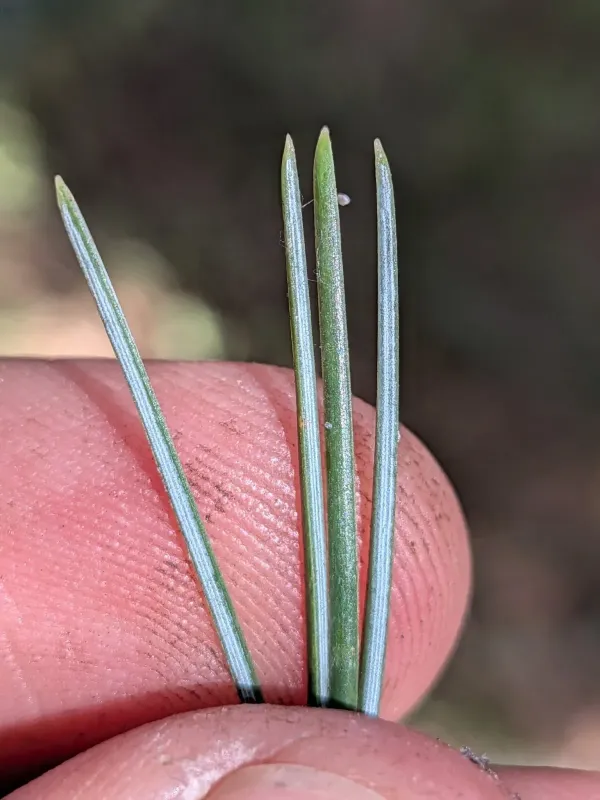
The botanical structure of the tree is unique due to its needle fascicles, which typically contain four needles per bundle. This adaptation, combined with a slow growth habit, allows the tree to conserve moisture efficiently in challenging environments.
Economically, the species is highly valued for its large, edible seeds, known as pinyons. These seeds are a traditional food source rich in essential fatty acids and proteins, making them a significant non-timber forest product in its native range.
Main diseases and pests
Wildfires represent the primary threat to the stability of four-needle pinyon populations. Due to the tree's slow rate of maturity and regeneration, frequent fire cycles can significantly reduce its presence in the landscape.
Bark beetles and other wood-boring insects can cause substantial damage, especially when trees are stressed by prolonged drought. These pests often target weakened specimens, leading to rapid decline and mortality if not managed.
Fungal pathogens, such as needle cast or various types of rusts, may affect the foliage under conditions of high humidity or poor nursery hygiene. Preventive measures focus on maintaining good airflow and proper plant spacing.
Mistletoe infestations are commonly observed on mature trees, acting as a parasite that draws nutrients from the host. Over time, significant infestations can suppress tree growth and diminish seed production capacity.
Integrated pest management strategies are crucial for cultivation, including regular inspections, maintenance of tree vigor through appropriate site selection, and the prompt removal of dead or heavily infested wood to prevent pest spread.