
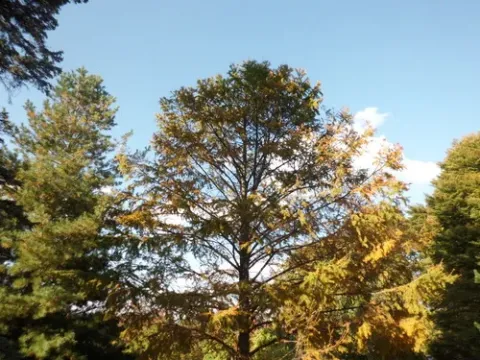
Golden larch
Pseudolarix
The Golden larch (Pseudolarix amabilis) is a unique monotypic genus of coniferous trees belonging to the Pinaceae family. Unlike the true larch, the cones of this plant disintegrate upon maturation, which is a key botanical distinction.
What the section contains

Golden larch
The culture originates from Eastern China, where it grows in mountainous regions. It is a deciduous tree that can reach heights of up to 30–40 meters in its natural habitat, although in cultivation, more compact forms are often preferred.
The plant has specific requirements for its growing environment: it prefers deep, well-drained, fertile soils with an acidic to neutral pH level. The Golden larch cannot tolerate waterlogging, making the choice of a site with excellent natural drainage critical.
Climate preferences include a moderately warm climate with sufficient rainfall. In its early years, the plant is sensitive to severe frosts and requires protection; however, as it matures, the hardiness of the culture increases significantly.
The economic use of the Golden larch is primarily ornamental. It is highly valued in landscape design for its graceful crown shape, delicate needles that turn a bright golden-yellow color in autumn, and high resistance to urban air pollution.
Among the main threats to the health of the Golden larch are fungal diseases that develop when moisture levels are not managed correctly. Excessive soil moisture triggers root rot, which can be fatal to the tree.
Pests that affect this crop are typical for most coniferous species. The most common issues include adelgids and spider mites, which feed on the sap of young needles, causing yellowing and premature needle drop.
Disease prevention is built upon strict adherence to agronomic practices: selecting the proper planting site, avoiding over-irrigation, and ensuring good air circulation around the plant canopy.
Systemic insecticides and acaricides are used for pest control if infestations are detected. Regular monitoring of the foliage during the spring and summer periods allows for early detection of issues, minimizing potential damage.
An important element of protection is sanitary pruning of dry and damaged branches, which prevents the spread of infections within the crown. Proper maintenance ensures high immunity and longevity for the tree.