
Guatemalan fir
Abies guatemalensis
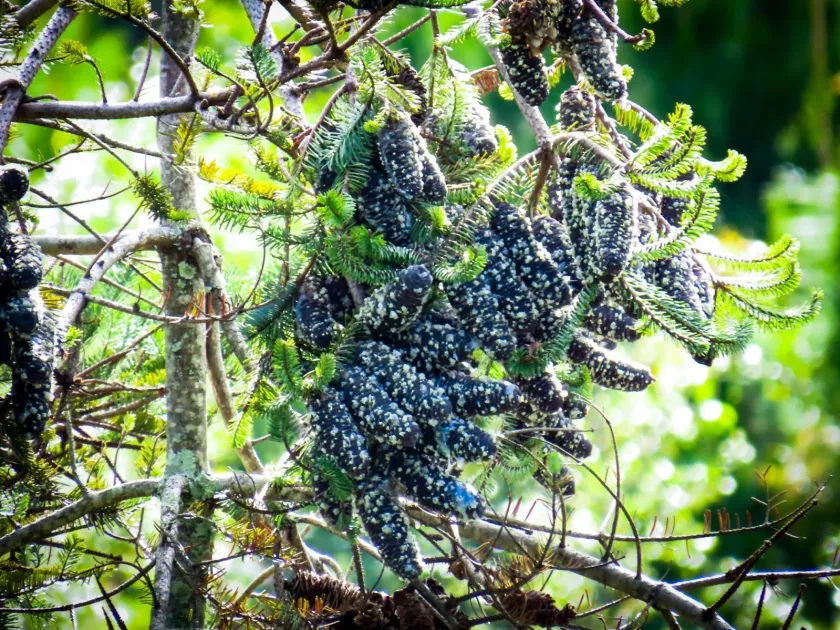
Description
Growing requirements
The Guatemalan fir (Abies guatemalensis) is a prominent member of the Pinaceae family, native to the high-altitude cloud forests of Central America. Its range spans from Mexico and Guatemala down to Honduras and El Salvador.
The species thrives in cool, humid environments typical of mountainous regions at elevations ranging from 1,800 to 4,000 meters. Constant moisture and frequent mist are crucial for the tree's health throughout the growing season.
It prefers deep, well-draining, and slightly acidic soils rich in organic matter. Waterlogged or poorly aerated soil conditions can lead to root system failure and stunted growth.
Physically, the Guatemalan fir is a majestic tree, characterized by dark, rigid, needle-like foliage and an elegant, pyramidal shape. It is a slow-growing species that can reach heights of up to 50 meters under ideal conditions.
Economically, while its timber is valued, the species is primarily managed for ecological protection and biodiversity conservation rather than large-scale commercial wood production.
Main diseases and pests
Habitat loss represents the most significant threat to the Guatemalan fir, driven primarily by deforestation for timber and the conversion of forest land into pasture or cropland.
Climate change poses a long-term risk, as rising temperatures force the species to migrate to higher, narrower ecological niches, effectively reducing its overall habitat area.
Fungal pathogens and pests are known to impact natural stands, especially those already stressed by environmental factors like soil degradation or increased sunlight exposure.
Illegal logging remains a critical issue that hinders natural regeneration and leads to the fragmentation of existing old-growth populations.
Conservation strategies focus on reforestation projects, seed banking, and the establishment of protected zones to ensure the long-term survival of this vulnerable species.