
Forrest fir
Abies forrestii
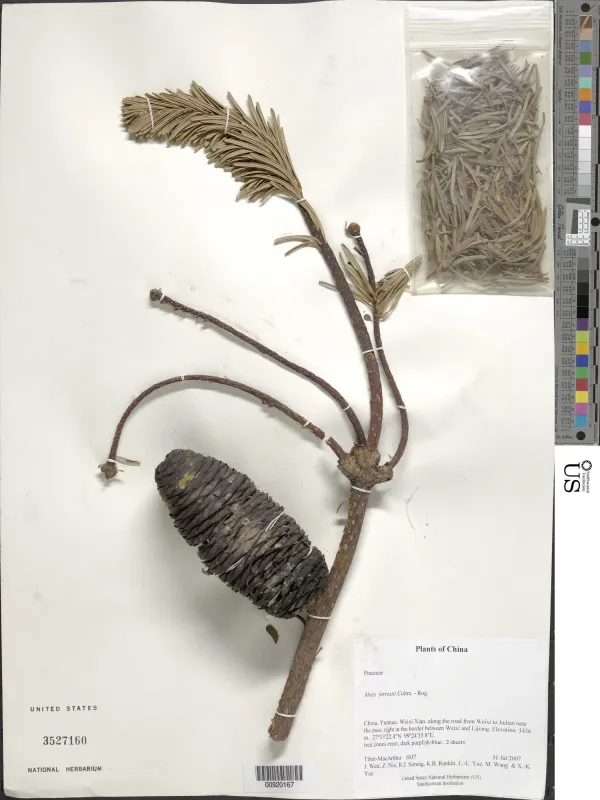
Description
Growing requirements
The Forrest fir (Abies forrestii) is a coniferous evergreen tree belonging to the Pinaceae family. Native to the mountainous regions of Southwestern China, this species thrives at high altitudes where cool temperatures and high atmospheric humidity are constant.
Botanically, the tree is noted for its striking foliage, featuring dark green needles with distinct white, stomatal bands on the underside. This provides a silvery appearance that makes the species highly desirable for ornamental planting in temperate garden zones.
The cultural success of Abies forrestii depends heavily on site selection. It requires a cool, humid climate with protection from harsh, dry winds and direct afternoon sun, which can scorch the needles, especially in younger, less established trees.
Soil conditions must be meticulously managed; the ideal substrate is a deep, fertile, and well-drained loam with a slightly acidic pH. Poor drainage is the most significant limiting factor, as the roots are highly susceptible to rot when subjected to waterlogging.
Standard horticultural practice involves maintaining consistent soil moisture during the growing season through mulching and supplemental irrigation. Periodic fertilization with specialized conifer fertilizers helps sustain healthy, vibrant needles and robust shoot development.
Main diseases and pests
Disease management is critical for the Forrest fir, as it is vulnerable to various needle cast fungi and rusts. Maintaining adequate air circulation through appropriate spacing and avoiding overhead irrigation can significantly mitigate the risk of fungal outbreaks.
Pests, such as woolly aphids (Adelgids) and spider mites, are common threats, particularly in drier or stressed conditions. Early detection and the application of systemic insecticides are standard measures to preserve the tree's structural integrity and aesthetic appeal.