
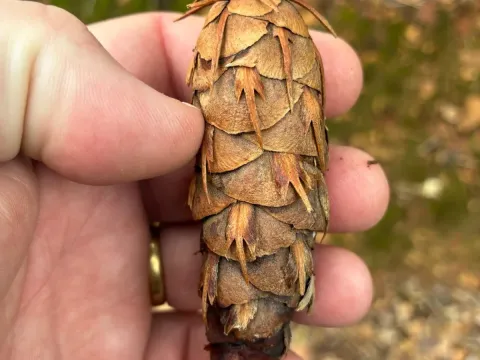
Douglas fir
Pseudotsuga
Douglas fir seeds are typically sown in nurseries during early spring once the soil temperature is sufficient to support germination and early root development.
What the section contains


Douglas fir
Pre-sowing stratification is essential for these seeds, requiring exposure to cold and moist conditions for several weeks to break dormancy effectively.
The standard seeding rate is meticulously managed to ensure optimal spacing, allowing each seedling enough room to develop a strong and healthy root system.
Seeds are sown at a shallow depth of approximately 1 cm, ensuring they remain protected while being close enough to the surface to emerge successfully.
Continuous monitoring of moisture levels after planting is critical, as young Douglas fir seedlings are sensitive to both drought and excessive waterlogging.
As a member of the Pinaceae family, the Douglas fir thrives in regions with moderate temperatures and consistent annual rainfall distribution.
It prefers deep, well-drained, fertile soils with a slightly acidic pH level, avoiding areas prone to water stagnation or extreme soil compaction.
While tolerant of partial shade in its juvenile stage, the tree requires full sun exposure as it matures to achieve its maximum growth potential.
Climatic adaptability is key, although the species is best suited for environments that mimic its native Pacific Northwest habitat without harsh frost events.
Site selection should also account for protection from strong prevailing winds, which can negatively impact growth form and tree stability on exposed sites.
The Douglas fir is widely recognized in forestry for its exceptional yield of high-quality timber, often outperforming many native conifer species.
Its wood is prized for its high strength-to-weight ratio, making it a primary choice for structural building materials, heavy construction, and interior joinery.
Efficient plantation management, including selective thinning, ensures that remaining trees have the resources to grow into high-value timber logs.
Beyond structural lumber, the biomass generated from well-managed Douglas fir stands is increasingly valued for paper pulp and renewable wood products.
Regular inventory assessments of growth rates are conducted to optimize harvest schedules and ensure the long-term sustainability of the forestry operation.
Fungal pathogens such as needle cast diseases represent a significant threat to young plantations, often causing foliage loss and reduced annual growth.
Insect pests, including various species of aphids and defoliating larvae, can cause severe stress, particularly in dense stands with poor ventilation.
Root rot diseases are particularly dangerous in areas where soil moisture management has been neglected or where previous logging debris remains.
Implementing a rigorous monitoring program allows foresters to detect early signs of infestation and apply corrective silvicultural practices immediately.
Integrated pest management strategies are preferred to maintain ecological balance while protecting the commercial viability of the timber stand.