
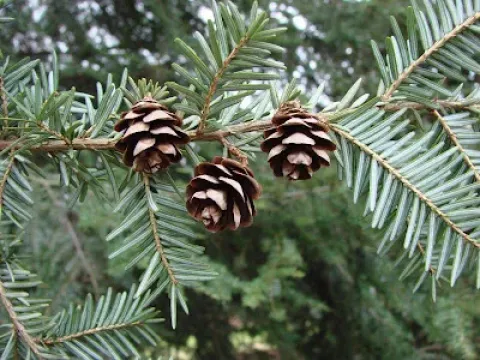
Forrest's hemlock
Tsuga forrestii
Forrest's hemlock (Tsuga forrestii) is a distinctive member of the Pinaceae family. This species is prized in horticulture for its elegant, graceful appearance and its slow-growing habit, making it an excellent candidate for specimen planting.
What the section contains
Forrest's hemlock
Native to the mountain forests of China, specifically in the Yunnan and Sichuan provinces, this conifer thrives in high-altitude environments. Its natural habitat is characterized by cool, moist conditions and rich, well-draining soils.
When cultivating this species, site selection is crucial. It prefers partial shade and should be protected from harsh, desiccating winds that can damage its delicate needles. The plant's aesthetic value is best realized in sheltered garden corners.
The ideal soil for Forrest's hemlock is fertile, slightly acidic, and well-aerated. It is highly sensitive to waterlogged conditions, which can lead to rapid root decay; therefore, a robust drainage system is mandatory for successful growth.
Maintenance involves providing consistent moisture, especially during the establishment years. Mulching is highly recommended to regulate soil temperature and retain humidity around the shallow root system, mimicking the conditions of its native forest floor.
The primary pathological threats include root rot and needle blight, typically caused by various fungi in poorly drained soils. Cultural control involves ensuring soil aeration and applying fungicides during periods of high humidity.
Insect pests such as spider mites and woolly adelgids can pose significant risks. Monitoring the undersides of needles during the spring is vital, as early detection allows for effective management with appropriate horticultural oils or systemic insecticides.