
Fir hybrids
Abies hybrids
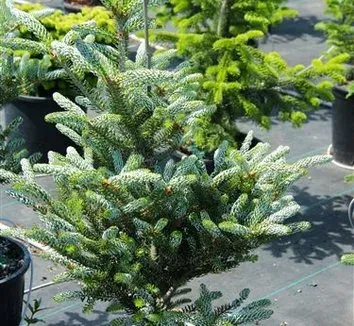
Description
Sowing dates
The sowing of fir hybrid seeds is typically performed in early spring once the soil temperatures stabilize between 10–12 degrees Celsius. To achieve optimal germination rates, seeds require a mandatory stratification period lasting from one to three months under cool, moist conditions.
The ideal window for establishing a nursery is mid-April, avoiding the risk of late-season frosts that could damage young seedlings. Greenhouse environments allow for earlier planting cycles, leading to more robust saplings ready for field transplanting by the season's end.
Seeds should be sown at a depth of 1–2 centimeters, ensuring the substrate remains consistently damp. A thin layer of mulch, such as peat or pine needles, is recommended to prevent the surface from drying out and to stabilize the moisture level around the seeds.
Vegetative propagation via cuttings is best performed in late summer using semi-hardwood shoots. The application of root-promoting hormones significantly increases the survival rate and root establishment in young fir hybrids during the initial growth phase.
In commercial operations, container-based cultivation is the preferred method as it facilitates easier transplanting and minimizes root system damage. This technique ensures high plant vigor and survival rates when moving seedlings to permanent outdoor locations.
Growing requirements
Fir hybrids represent a diverse group of conifers within the Pinaceae family, bred to combine the best ornamental and adaptive traits of parent species. These trees are highly valued in both landscaping and forestry for their structural beauty and environmental resilience.
The culture thrives in deep, well-draining soils with a loam or sandy-loam texture. Slightly acidic soil conditions are ideal, as they facilitate the efficient uptake of essential nutrients, particularly micronutrients like iron and magnesium.
Climatic requirements favor regions with high atmospheric humidity and protection from harsh, desiccating winds. While firs are generally shade-tolerant, they benefit from partial exposure to diffuse sunlight to promote steady, healthy growth during their developmental years.
Regular irrigation is vital for fir hybrids, especially during dry spells, due to their shallow root systems which are susceptible to drought stress. Conversely, soil waterlogging must be avoided to prevent hypoxia and the subsequent development of fungal root pathogens.
Ongoing maintenance includes the application of specialized conifer fertilizers. It is crucial to halt nitrogen applications by mid-summer to prevent late-season soft growth, which is susceptible to frost damage during the subsequent winter months.
Main diseases and pests
Common pathological issues include needle cast diseases and various rusts, which thrive in stagnant, humid environments. Maintaining proper airflow through the canopy and implementing preventative fungicidal treatments are the primary defenses against these infections.
Pests such as adelgids and aphids are frequently encountered, as they feed on sap and cause deformation of young shoots. Targeted systemic insecticide applications are effective for managing infestations, provided they are applied early in the growth cycle.
The spruce spider mite represents a significant threat during periods of prolonged heat and drought, often manifesting as localized browning of the needles. Effective control requires the timely application of acaricides to prevent extensive defoliation.
Root rot, often a consequence of poor soil drainage, can be devastating to younger fir hybrids. Integrating proper drainage solutions during the site preparation phase is essential for mitigating this long-term risk to plant health.
- Regular removal of dead or diseased branches.
- Monitoring for pest activity in early spring.
- Use of copper-based fungicides for prevention.
- Maintaining proper spacing to ensure adequate light and air circulation.