
Gerard's pine
Pinus gerardiana
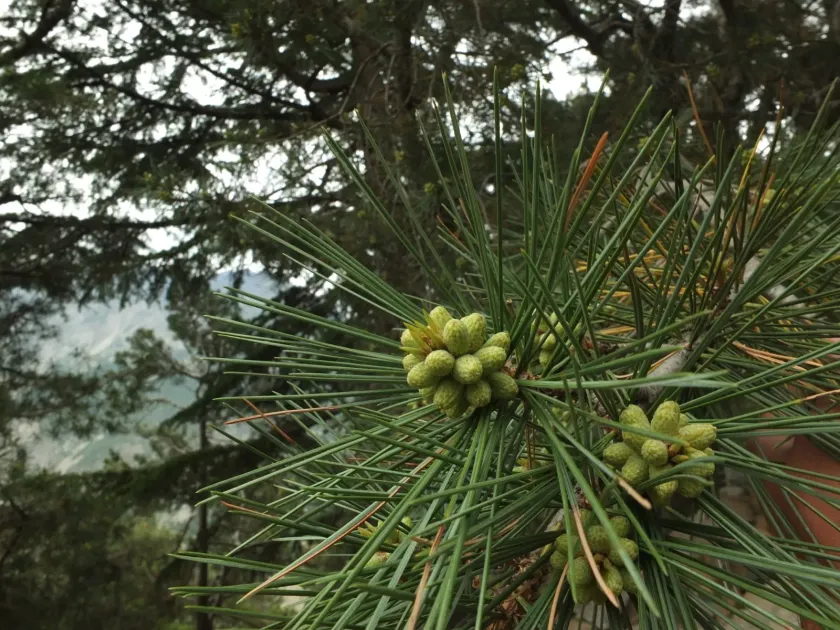
Description
Sowing dates
Propagating Gerard's pine via seeds requires a stratification process lasting 30 to 60 days in cool conditions to break dormancy and ensure successful germination. Seeds should be sown in early spring into a light, well-draining substrate.
Planting depth should be approximately 2 to 3 centimeters. Consistent but moderate moisture is essential during the initial growth phase, as both waterlogging and extreme desiccation can kill the seedlings.
Growth during the first few years is notably slow. It is vital to protect young plants from competing weeds and intense direct sunlight, which can stress the delicate saplings before they establish a deep root system.
Transplanting to a permanent location must be handled with care to keep the root ball intact. Avoiding damage to the roots is critical, as this species is highly sensitive to transplantation shock.
Proper spacing is necessary to allow for the future development of the wide, spreading crown. Dense planting restricts airflow and increases the risk of fungal infections among developing trees.
Growing requirements
Pinus gerardiana is a member of the Pinaceae family, native to the northwestern Himalayan region. It thrives in high-altitude environments, typically between 1800 and 3300 meters above sea level.
The tree requires rocky or limestone-based soils with exceptional drainage. Stagnant water is detrimental to the tree's health, often leading to rapid root decay and decline.
Gerard's pine is a sun-loving species that demands high light intensity for optimal development. Shade-grown specimens exhibit sparse foliage, weakened structural integrity, and reduced reproductive capacity.
It displays remarkable resilience to harsh, dry, and cold climates. These physiological adaptations allow it to survive in the arid slopes of its native range where other tree species struggle.
A successful establishment depends on the presence of specific soil mycorrhiza. Adding soil from existing pine groves can help ensure that the necessary beneficial fungi are present for the saplings.
Yield
The primary economic value of Gerard's pine lies in its edible seeds, commonly referred to as chilgoza. These nuts are highly prized for their rich nutritional profile, including healthy fats and proteins.
The tree typically begins to produce a meaningful harvest between 20 and 25 years of age. Under favorable conditions, it can continue to provide consistent yields for several decades.
Annual yields from a mature tree average between 5 and 10 kilograms of shelled nuts, although environmental factors and genetic variation can significantly influence these numbers from year to year.
Cones require two years to reach maturity. Throughout this long development period, the tree needs protection from extreme weather events that could dislodge the cones before harvest.
Investment in this crop is long-term. As global demand for specialty pine nuts increases, sustainable forest management practices for Gerard's pine are becoming more economically viable.
Main diseases and pests
Bark beetles and wood-boring insects are the most significant pests for Pinus gerardiana. They predominantly attack trees that have been weakened by prolonged drought or physical damage.
Fungal diseases, such as needle rusts, can become problematic in overly dense plantations with poor airflow. Maintaining appropriate plant density is a key preventative measure against these threats.
Small mammals and birds are a major concern during the seed-ripening phase. These pests often consume a significant portion of the harvest directly from the cones while they are still on the tree.
Livestock overgrazing in young plantation areas can lead to the destruction of lead shoots, permanently stunting the tree's growth and reducing its future reproductive potential.
Sanitation practices, such as the timely removal of dead branches and diseased trees, are essential to minimize the spread of pathogens and maintain a healthy forest environment.
Harvesting
Harvesting chilgoza is a labor-intensive manual task. Because trees can grow quite tall, specialized skills and equipment are required to safely access the cones high in the crown.
Cones are typically harvested before they fully open to prevent the loss of seeds. This requires careful timing, often utilizing long poles to reach the cones in the upper canopy.
After collection, the cones are subjected to controlled heat to soften the woody scales. This process allows the nuts to be extracted easily without damaging the sensitive inner kernels.
Post-harvest processing involves sorting and cleaning the nuts to remove shells and debris. Quality control at this stage is vital to ensure the final product meets market standards.
Proper storage is critical for maintaining shelf life. Because the nuts are high in natural oils, they must be kept in cool, dry, and well-ventilated areas to prevent rancidity and ensure optimal flavor.