
Fenzel's pine
Pinus fenzeliana
Description
Growing requirements
Fenzel's pine (Pinus fenzeliana) is a species of conifer belonging to the family Pinaceae. Native to the mountainous regions of southern China and northern Vietnam, it typically thrives in subtropical high-altitude environments.
The species prefers well-drained rocky or sandy substrates. In its natural habitat, it demonstrates high resilience to nutrient-poor soils, which makes it a unique candidate for reforestation projects in similar ecological zones.
Climatic requirements involve stable humidity levels and moderate seasonal temperatures. While young trees benefit from partial shade, mature specimens require full sun exposure for optimal cone production and growth rate.
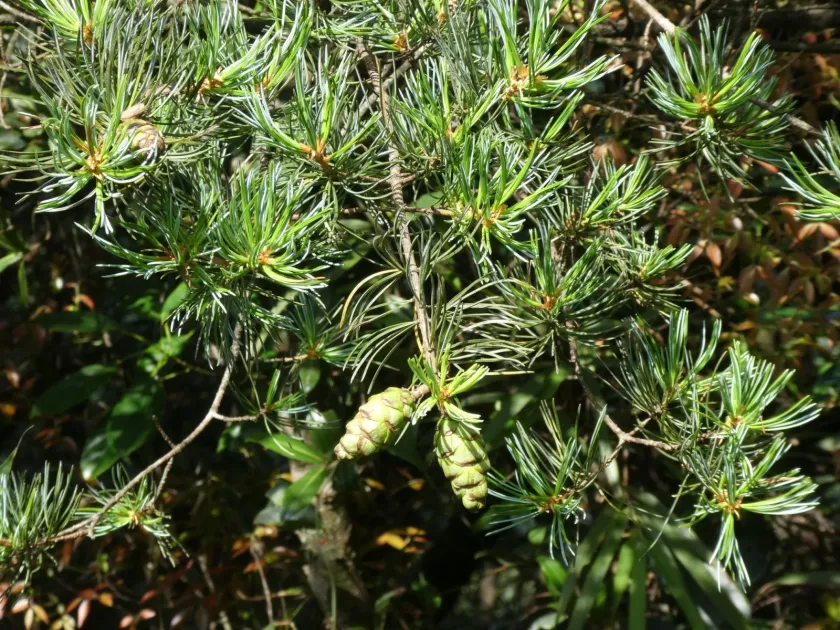
Botanically, it is classified as a white pine. The needles are arranged in bundles of five, and the tree is characterized by its relatively large, woody cones, which differentiate it from other related Pinus species.
In terms of хозяйственное (economic) utilization, Fenzel's pine is valued for its timber and as a specimen tree in specialized arboretums. Its adaptability to mountain landscapes makes it an important element of biodiversity in its endemic regions.
Main diseases and pests
The primary threats to Pinus fenzeliana include fungal pathogens such as needle cast diseases, which thrive in stagnant air and high-humidity environments. These pathogens can significantly reduce the tree's photosynthetic capacity.
Insect pests, notably sawflies and various species of aphids, pose a risk to the tree's vitality. Larvae of these insects often feed on new growth, causing deformity and stunted development of the shoots.
Management of these threats requires vigilant monitoring and the application of integrated pest management (IPM) practices, including biological control agents where feasible.
Fungal control involves the use of copper-based fungicides applied during the early growth season to prevent the spread of spores. Ensuring proper spacing between trees is crucial to minimize the risk of infection.
Environmental stressors, such as climate change and habitat fragmentation, also impact the resilience of the species, making conservation efforts a priority for local forestry departments.