
Hartweg's pine
Pinus hartwegii
Description
Growing requirements
Hartweg's pine (Pinus hartwegii), belonging to the Pinaceae family, is a distinct high-altitude tree species native to the mountain ranges of Mexico and Central America. It naturally inhabits the subalpine zone, often growing at elevations between 2500 and 4000 meters.
This species is highly adapted to harsh environmental conditions, including freezing temperatures, high UV radiation, and thin soils. It thrives in well-drained, acidic to neutral volcanic soils and exhibits remarkable tolerance to extreme wind exposure and snow weight.
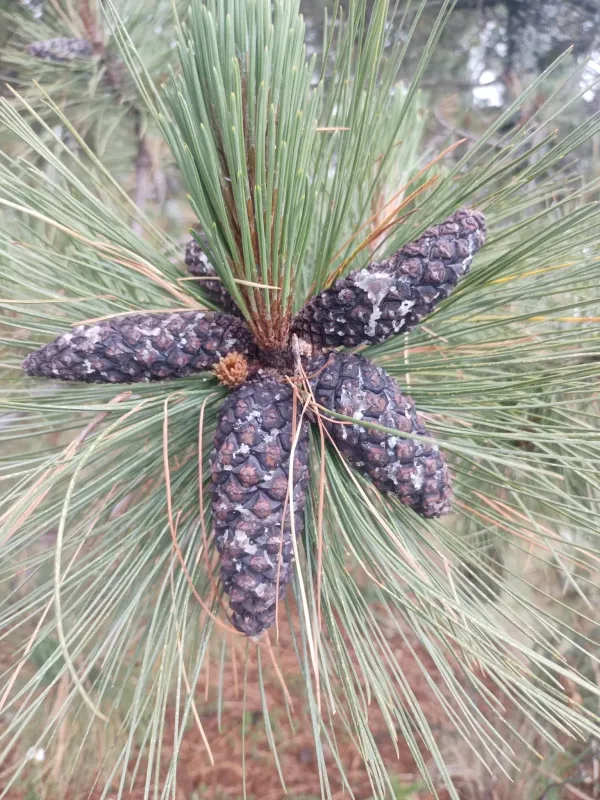
Botanically, the tree is characterized by its compact habit and dark green needles arranged in bundles of three to five. Its growth rate is generally slow, reflecting its adaptation to the short growing seasons characteristic of its native high-altitude environment.
In terms of cultivation, Hartweg's pine requires full sun exposure and excellent soil drainage. It is not suitable for humid, low-elevation environments with heavy soil, as it requires the specific cool, well-aerated conditions found in mountainous regions.
Economically, this pine is primarily utilized in high-altitude forestry for soil stabilization, watershed protection, and reforestation of degraded mountain slopes, where it serves as a keystone species for local ecosystems.
Main diseases and pests
Hartweg's pine is susceptible to various fungal pathogens, particularly those affecting the needles and roots during periods of excessive soil moisture or poor drainage. Preventing stagnant moisture is critical to maintaining tree health.
Insect pests such as bark beetles and needle-feeding caterpillars can cause significant damage, especially in stands already weakened by environmental stress. Monitoring for early signs of infestation is essential for effective forest management.
Climatic stress due to changing weather patterns poses a growing threat, potentially increasing the vulnerability of the trees to secondary infections and infestations. Long-term health depends on maintaining site conditions that favor the species' natural resilience.
Integrated pest management strategies are recommended, focusing on maintaining tree vigor and preventing the spread of diseases. This includes careful monitoring and, where necessary, the removal of infected plant materials to protect neighboring trees.
During the sapling stage, protection from browsing mammals is often necessary. Physical barriers or repellents are commonly employed to prevent damage to the terminal buds, which is crucial for the development of the tree's form.