
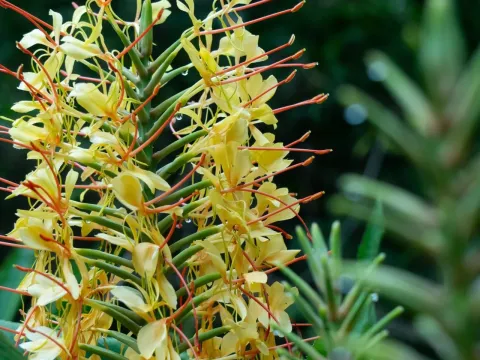
Hedychium
Hedychium
Hedychium, belonging to the Zingiberaceae family, is a perennial herb characterized by robust horizontal rhizomes. In agricultural practice, the most common propagation method involves dividing these rhizomes during the early spring season, just before the active growth phase begins.
What the section contains
 Graceful ginger lily
Hedychium gracile
Graceful ginger lily
Hedychium gracile
 Green-bract ginger lily
Hedychium viridibracteatum
Green-bract ginger lily
Hedychium viridibracteatum
 Hedychium
 hybrids
Hedychium
Hedychium hybrids
 Hedychium acuminatum
Hedychium acuminatum
Hedychium acuminatum
 Hedychium cylindricum
Hedychium cylindricum
Hedychium cylindricum
 Hedychium deceptum
Hedychium deceptum
Hedychium deceptum
 Hedychium densiflorum
Hedychium densiflorum
Hedychium densiflorum
 Hedychium ellipticum
Hedychium ellipticum
Hedychium ellipticum
 Hedychium flavum
Hedychium flavum
Hedychium flavum
 Hedychium forrestii
Hedychium forrestii
Hedychium forrestii
 Hedychium greenii
Hedychium greenii
Hedychium greenii
 Hedychium griffithianum
Hedychium griffithianum
Hedychium griffithianum
 Hedychium horsfieldii
Hedychium horsfieldii
Hedychium horsfieldii
 Hedychium longicornutum
Hedychium longipedunculatum
Hedychium longipedunculatum
Hedychium oblongum
Hedychium oblongum
Hedychium longicornutum
Hedychium longicornutum
Hedychium longipedunculatum
Hedychium longipedunculatum
Hedychium oblongum
Hedychium oblongum
 Hedychium stenopetalum
Hedychium stenopetalum
Hedychium stenopetalum
 Hedychium thyrsiforme
Hedychium thyrsiforme
Hedychium thyrsiforme
 Hedychium villosum
Hedychium villosum
Hedychium villosum
 Kahili Ginger
Hedychium gardnerianum
Kahili Ginger
Hedychium gardnerianum
 Philippine Ginger Lily
Hedychium philippinense
Philippine Ginger Lily
Hedychium philippinense
 Scarlet ginger lily
Hedychium coccineum
Scarlet ginger lily
Hedychium coccineum
 Yellow Ginger Lily
Hedychium flavescens
Yellow Ginger Lily
Hedychium flavescens
Hedychium
Seed propagation is also possible but significantly slower; it is mainly practiced in greenhouse conditions where a constant temperature of +22 to +25 degrees Celsius can be maintained. Seeds should be sown immediately after harvesting to ensure high viability.
When planting rhizomes, they should be placed at a depth of 5 to 10 centimeters, ensuring that the growth buds face upward. Providing adequate space between plants is crucial to allow the wide, sword-shaped leaves to develop fully without overcrowding.
The ideal time for transplanting into open ground is when the danger of frost has passed and the soil has warmed sufficiently. If cultivated in colder regions, it is best to use containers that can be moved indoors during unfavorable weather.
Proper soil preparation, including deep tilling and the incorporation of organic matter, provides the foundation for vigorous growth and successful establishment of the crop.
As a tropical plant, Hedychium requires high air humidity and consistently moist soil to thrive. It performs best in full sun or light shade, provided it is protected from strong, drying winds that can cause leaf damage.
The soil must be rich in organic content with a slightly acidic to neutral pH. Excellent drainage is non-negotiable; waterlogging in the root zone quickly triggers rot, which can destroy the rhizomes within a short period.
During the peak growing season, the plant demands regular, deep watering and balanced fertilization. High-nitrogen fertilizers are particularly effective in promoting the lush foliage and the development of large, fragrant flower spikes.
A stable temperature range of +20 to +30 degrees Celsius is ideal for maximum growth. The plant is highly sensitive to cold, and even light frosts can kill the above-ground portions, necessitating winter protection or relocation.
In greenhouses, maintaining good airflow is essential to prevent fungal diseases, as the combination of high humidity and stagnant air can quickly become a significant management challenge.
The commercial cultivation of Hedychium is primarily focused on the extraction of essential oils, which are highly prized in the fragrance and cosmetic industries. Yield efficiency is largely determined by consistent care and optimal lighting conditions.
The harvesting of flower spikes for oil extraction should occur when the blossoms are fully open, as the concentration of aromatic compounds reaches its peak at this specific stage of development.
The rhizomes are also a valuable commodity for the pharmaceutical industry due to the presence of bioactive compounds. These are typically harvested after the growing cycle is complete and the foliage has naturally withered.
Ornamental yield is assessed by the number and quality of flower spikes produced. A well-managed, healthy plant can produce dozens of inflorescences within a single season, adding significant value to commercial floral displays.
Adopting precision agricultural techniques, such as drip irrigation and targeted micronutrient application, can significantly increase the economic output of Hedychium plantations.
Root rot is the most serious threat to Hedychium, typically triggered by improper watering practices and poor soil structure. If rot is detected, the affected parts of the rhizome must be removed immediately, and the area treated with a suitable fungicide.
Spider mites are the most common pests, particularly during hot and dry weather. Regular misting of the foliage is a highly effective preventative measure against these insects, as they thrive in low-humidity conditions.
Aphids and scale insects may also infest new shoots, sucking plant juices and causing stunted growth. Systemic insecticides can be used to control these pests, provided that safe pre-harvest intervals are strictly observed.
Grey mold (Botrytis) can develop on flowers under conditions of prolonged wetness or excessive overhead watering. To avoid this, irrigation should be directed at the base of the plant rather than the blooms.
Regular maintenance, including the disinfection of tools before division and ensuring proper plant spacing, serves as a cornerstone for disease prevention.
The harvest of rhizomes occurs in late autumn, following the natural senescence of the foliage. Rhizomes are carefully lifted from the ground, ensuring that the primary growth buds remain intact for future use.
Once harvested, the material is cleaned of soil and debris, rinsed, and dried in a shaded, well-ventilated area to prepare for processing or storage.
For the production of essential oils, the harvested plant material should undergo steam distillation as quickly as possible to preserve the volatile aromatic compounds that provide the scent.
Rhizomes intended for future propagation should be stored in cool, dark environments with a temperature of +10 to +12 degrees Celsius, packed in slightly moist peat or sand to prevent desiccation.
Cut flowers destined for the floral market should be harvested using sharp, clean tools and immediately placed in water to maintain turgor and extend the vase life of the inflorescence.