
Hedychium
Hedychium hybrids
Description
Sowing dates
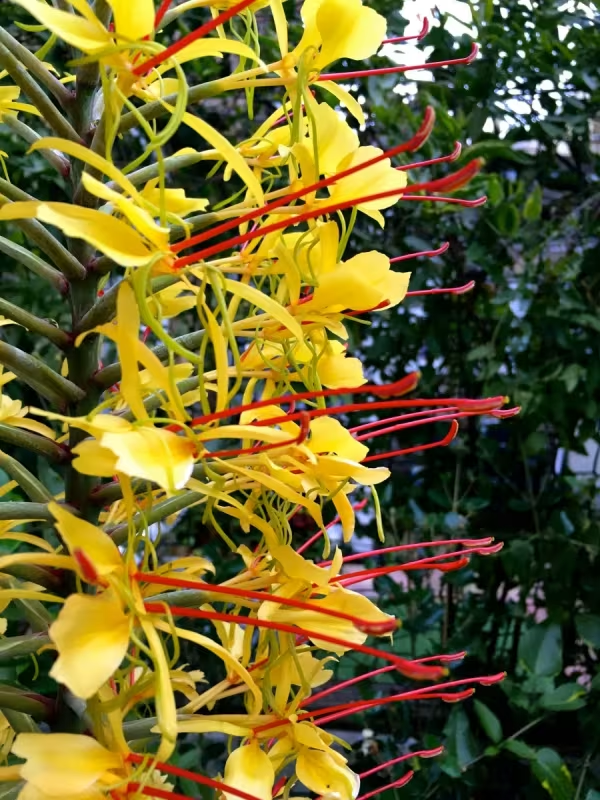
Hedychium (Hedychium hybrids) belongs to the Zingiberaceae family. In commercial production, the crop is primarily propagated through vegetative means, specifically the division of rhizomes, which ensures the consistency of hybrid characteristics.
Planting of the rhizomes is carried out in the spring once the soil temperature consistently exceeds 15 degrees Celsius. It is crucial to ensure an adequate planting depth to protect the young buds from mechanical stress and temperature fluctuations during the early growth stages.
When employing the seed propagation method, sowing occurs in a controlled greenhouse environment at a stable temperature between 20 and 25 degrees Celsius. The seeds feature a hard seed coat, necessitating scarification or pre-treatment with growth stimulants to enhance germination rates.
Preparing high-quality propagation material is vital; rhizomes must be robust, free from rot, and devoid of pest infestation. A prophylactic treatment with broad-spectrum fungicides is recommended prior to planting to prevent early-stage infection.
The planting density depends on the intended use: commercial cut flower production requires wider spacing for nutrient uptake, whereas ornamental landscape design allows for denser clusters to create an immediate visual impact.
Growing requirements
Hedychium is a moisture-loving crop native to tropical Asian forests. Successful cultivation requires high humidity levels and consistent irrigation during the peak growth season, particularly during the flower-spike development phase.
The crop has specific soil requirements; the growing medium must be loose, nutrient-rich, and possess a slightly acidic to neutral pH. Waterlogging must be strictly avoided, necessitating the inclusion of a drainage layer in heavy or clay-heavy soils.
Light intensity is a critical determinant of flowering success. Hedychium prefers filtered sunlight or partial shade; direct, intense midday sunlight can cause leaf scorching, which significantly diminishes the aesthetic and commercial value of the crop.
Stable temperature control is essential as the plants are highly sensitive to frost. In temperate regions, Hedychium is typically grown as a container crop and moved into sheltered environments during the winter months.
To support vigorous growth, the application of balanced mineral fertilizers is necessary during the vegetative phase, while a switch to a higher phosphorus and potassium ratio is required as the plant transitions to the floral bud formation stage.
Yield
The commercial use of Hedychium encompasses three primary sectors: landscape gardening, the production of exotic cut flowers for the floral industry, and the extraction of essential oils for the fragrance industry.
Economic yield is measured by the quality and quantity of flower spikes produced per plant. High-performing hybrids can produce between 5 to 7 large inflorescences per season under optimal management conditions.
In floriculture, productivity is defined by the vase life of the cut stems and their resistance to post-harvest handling and transport. Advanced hybrids provide a consistent supply of marketable flowers throughout the summer and autumn months.
Rhizomes are also harvested for the pharmaceutical industry due to their content of specific bioactive compounds, though this remains a niche segment requiring specialized cultivation protocols and infrastructure.
Overall profitability depends on regional climate adaptability and the ability to optimize heating costs in greenhouse environments if year-round production cycles are intended.
Main diseases and pests
Fungal root diseases are a frequent issue, often triggered by overwatering and inadequate drainage. If rot symptoms appear, immediate substrate replacement and fungicide application are required to salvage the plant.
In protected greenhouse environments, Hedychium is prone to spider mite infestations, which thrive in low-humidity conditions. Regular misting and the use of acaricides are necessary to keep pest populations below the economic threshold.
Aphids and mealybugs can target young shoots and leaf axils, extracting plant sap and weakening the crop. Systematic insecticide application during the pre-flowering stage is the most effective management strategy.
Viral infections manifest as leaf mosaic patterns and floral deformation. Management is limited to strict phytosanitary control, including the prompt removal and destruction of infected plants to prevent further spread.
Nematodes represent a significant threat to the root system in outdoor settings. Preventive measures involve using sterilized growing media and strictly adhering to crop rotation practices within greenhouse production units.
Harvesting
Flower spikes are harvested when approximately one-third of the florets on the spike have opened. This stage ensures the longest vase life and provides the most attractive appearance for the final consumer.
Harvesting tools must be sharp and sterilized to prevent the entry of pathogens into the plant tissue. Harvesting is ideally conducted during the early morning hours when plant tissues are fully turgid and hydrated.
Post-harvest, flowers should be moved immediately to a cool environment and placed in containers with water enriched with floral preservatives to maintain quality during distribution.
For rhizome harvesting, the process is initiated after the natural senescence of the foliage in late autumn. Rhizomes should be cleaned of soil, washed, and dried in a well-ventilated area before storage.
Stored rhizomes should be kept at temperatures between 5 and 10 degrees Celsius, layered in sand or peat, to prevent desiccation until the following planting season commences.