
Hedychium griffithianum
Hedychium griffithianum
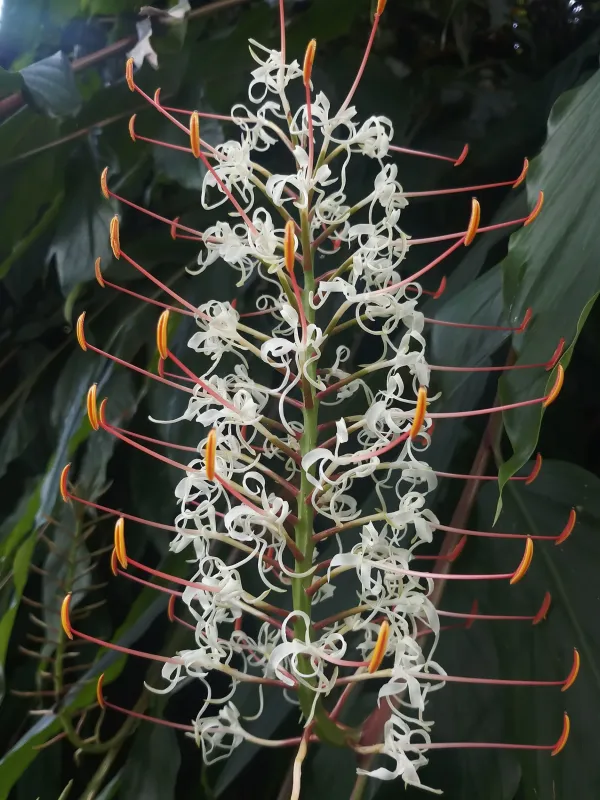
Description
Growing requirements
Hedychium griffithianum is a remarkable perennial herbaceous plant belonging to the Zingiberaceae family. Native to the mountainous regions of the Himalayas, this species thrives in humid, shaded forest environments, which dictates its specific ecological requirements in cultivation.
The plant prefers rich, loamy, and well-drained soils that remain consistently moist. In an agricultural or garden setting, a substrate with a high content of organic matter is ideal to support the vigorous growth of its rhizomes throughout the growing season.
Temperature management is critical for this species. It prefers a moderate climate with temperatures ranging between 20°C and 25°C. As a tropical and subtropical plant, it is not frost-tolerant and must be protected from freezing temperatures during the winter months.
Regarding light conditions, Hedychium griffithianum performs best in bright, filtered light or partial shade. Direct exposure to intense sunlight can scorch the foliage and cause excessive evaporation, which is detrimental to the plant's overall health.
Maintenance involves keeping the soil evenly moist but never waterlogged. Regular hydration, combined with high atmospheric humidity, ensures that the plant develops lush, healthy foliage and reaches its peak flowering potential each year.
Main diseases and pests
The primary agronomic threat to Hedychium griffithianum is root rot, which typically develops when the plant is kept in heavy or poorly drained soils. Managing drainage is the most effective way to prevent these fungal infections.
Pests such as spider mites are a common concern, especially in indoor or greenhouse conditions where the air may become too dry. These mites can cause significant damage to leaves by draining cell sap.
Mealybugs can also infest the plant, usually clustering in the leaf axils. Regular monitoring and physical removal, or the application of insecticidal soaps, are recommended for maintaining plant health.
Cultural control includes ensuring proper air circulation around the plants, which helps to reduce the incidence of fungal issues and discourages pest colonization on the dense foliage.
For more severe infestations, targeted application of environmentally safe pesticides may be required, ensuring that the chemical agent is compatible with ginger family plants to avoid phytotoxicity.