
Hedychium forrestii
Hedychium forrestii
Description
Growing requirements
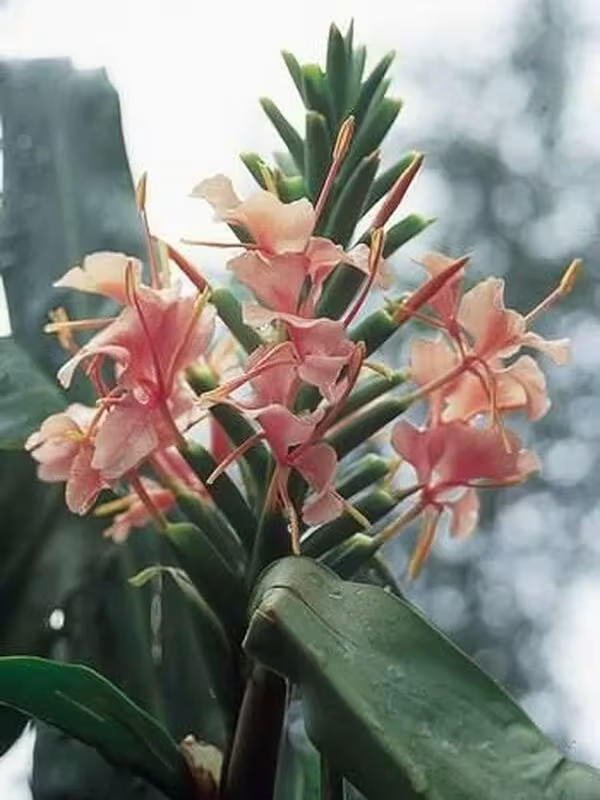
Hedychium forrestii is a perennial rhizomatous plant belonging to the Zingiberaceae (Ginger) family. Native to the forest regions of Southeast Asia and China, it is highly valued for its striking, fragrant inflorescences and lush, tropical foliage.
The crop thrives in warm, humid climates with protection from harsh, direct sunlight. It is best suited for partial shade locations where the leaves can develop without heat stress, mimicking the filtered light of its native understory habitat.
A well-drained, nutrient-rich, and slightly acidic soil is essential for optimal development. Growers should ensure that the planting medium includes plenty of organic matter, such as compost or peat, to retain moisture while preventing waterlogging, which is detrimental to the rhizomes.
Agronomic management involves regular irrigation during the growing season and periodic fertilization to support the rapid development of stems and flowers. In cooler climates, this plant must be cultivated in pots and moved to a greenhouse or indoors before the first frost.
The primary use of Hedychium forrestii is in ornamental landscaping and horticulture. It serves as an excellent feature plant for tropical-style gardens and is also cultivated for the florist trade, as its long-lasting, fragrant flower spikes are highly prized in bouquets.
Main diseases and pests
Common pests affecting this species include spider mites, aphids, and mealybugs. These are particularly troublesome in environments with low humidity, necessitating regular monitoring and localized treatments to maintain plant vigor.
Pathogenic threats primarily involve fungal issues such as rhizome rot and leaf spot diseases. These are typically associated with poor drainage or stagnant air conditions. Mitigation involves spacing plants adequately to ensure airflow and applying fungicides if early signs of infection occur.