
Kahili Ginger
Hedychium gardnerianum
Description
Growing requirements
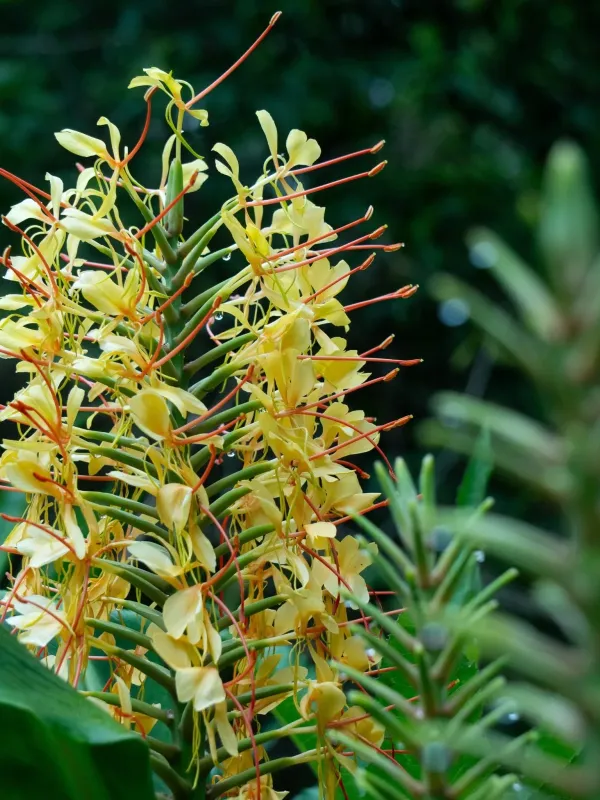
Kahili ginger (Hedychium gardnerianum) is a member of the Zingiberaceae family. Native to the Himalayas, this herbaceous perennial is prized for its spectacular fragrant inflorescences and lush, architectural foliage, making it a popular choice for ornamental horticulture in warm climates.
The plant thrives in warm, humid environments, ideally with temperatures ranging from 20°C to 28°C. It is not frost-tolerant and requires protection during colder months, either by mulching the rhizomes in mild climates or by lifting them for indoor storage in colder regions.
For optimal growth, the soil must be rich, moisture-retentive, and well-draining. A high organic content, such as composted bark or leaf mold, provides the necessary nutrients and structure. Soil pH should ideally remain slightly acidic to neutral to ensure effective nutrient uptake.
Light requirements involve bright, filtered sunlight. While Kahili ginger can tolerate full sun in high-humidity coastal areas, it is prone to leaf scorch in hot, dry climates if not provided with partial shade during the peak afternoon heat.
Maintenance includes consistent irrigation throughout the growing season to ensure the rhizomes remain plump and healthy. During the dormant winter phase, watering should be significantly reduced to prevent waterlogging, which can easily lead to tissue rot.
Main diseases and pests
Pest issues primarily include spider mites and mealybugs, which tend to congregate in the leaf axils or on the undersides of the foliage. Regular monitoring and the application of horticultural oils or insecticidal soaps are standard management practices.
Rhizome rot is the most serious threat, usually associated with heavy, poorly drained soils or excessive winter moisture. To mitigate this risk, growers should prioritize excellent site drainage and ensure that the rhizomes are planted shallowly rather than too deep in the medium.