
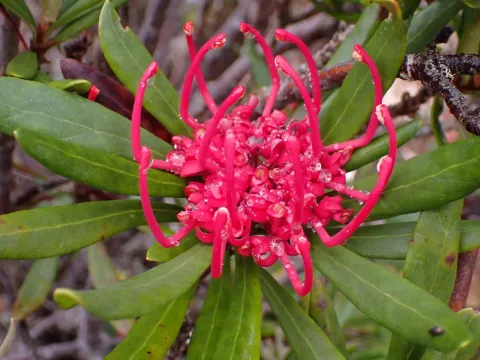
Telopea
Telopea R. Br.
Telopea is a genus of iconic evergreen shrubs belonging to the Proteaceae family. Native to southeastern Australia, these plants are renowned for their spectacular inflorescences, making them a high-value commercial crop for the cut flower industry.
What the section contains
 Gippsland waratah
Telopea oreades F. Muell.
Gippsland waratah
Telopea oreades F. Muell.
 Tasmanian waratah
Telopea truncata (Labill.) R. Br.
Tasmanian waratah
Telopea truncata (Labill.) R. Br.
 Telopea
 speciosissima x Telopea mongaensis
Telopea
Telopea speciosissima x Telopea mongaensis
 Telopea
 speciosissima x Telopea truncata
Telopea
Telopea speciosissima x Telopea truncata
 Telopea mongaensis
 Cheel
Waratah
Telopea speciosissima x Telopea oreades
Telopea mongaensis
Telopea mongaensis Cheel
Waratah
Telopea speciosissima x Telopea oreades
 Waratah
Telopea speciosissima (Sm.) R. Br.
Waratah
Telopea speciosissima (Sm.) R. Br.
Telopea
Successful cultivation requires specific soil conditions, characterized by high acidity and excellent drainage. The plants are highly sensitive to phosphorus, necessitating the use of specialized low-phosphorus fertilizers to avoid toxic build-up in the soil.
As a climate-sensitive species, Telopea thrives in controlled greenhouse environments in non-native regions. It requires stable temperatures, typically ranging from 15 to 25 degrees Celsius, and protection from frost, which can be lethal to the plant.
Adequate light intensity is essential for flower initiation and proper development. While the plants require plenty of sunlight, greenhouse shading is often necessary to protect leaves from excessive heat and direct solar radiation during peak hours.
Irrigation must be managed with precision. Utilizing low-salinity water is critical, as salt accumulation can lead to leaf burn and chlorosis. A robust drainage system is non-negotiable to prevent moisture-related root complications.
The primary agricultural threat to Telopea is the fungal pathogen Phytophthora, which causes devastating root rot. This pathogen is typically introduced through contaminated water or poor drainage conditions within the growing medium.
Pests such as scale insects and mealybugs pose a recurring threat to the stems and foliage. These insects are difficult to control once established, making early detection and the use of systemic insecticides common management practices.
Spider mites can rapidly colonize plants in low-humidity greenhouse environments. Maintaining proper airflow and relative humidity is a standard preventative measure to inhibit the proliferation of these pests.
Botrytis, or grey mold, can affect the flowers and foliage under high humidity conditions. Implementing strict environmental controls and ensuring proper plant spacing helps to improve air circulation and mitigate this risk.
Nutrient deficiency, specifically iron chlorosis, is common if the soil pH rises above the optimal range. Regular soil monitoring and the use of chelated iron supplements are often required to maintain foliage health and productivity.