
Showy banksia
Banksia speciosa
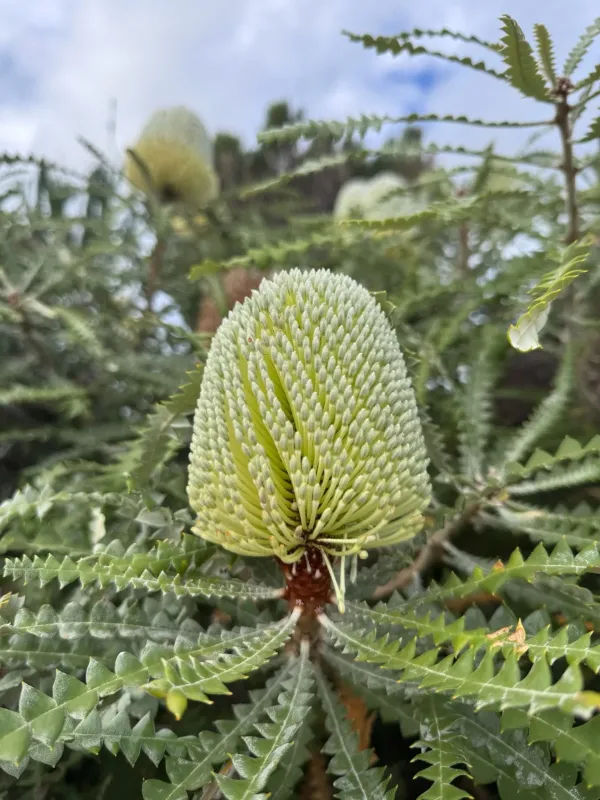
Description
Sowing dates
Propagation of Banksia speciosa is primarily achieved through seeds. The seeds possess high dormancy and require stratification to stimulate successful germination rates.
For optimal sowing, use a well-draining, sandy substrate with very low phosphorus levels. The best time for sowing under controlled environments is in early spring.
Seeds are sown at a depth equivalent to their size, maintaining consistent moisture levels without waterlogging. Excess moisture often leads to seed rot.
Germination is often uneven and may take several weeks to months. Once the first pair of true leaves appears, seedlings should be carefully moved to individual pots.
Vegetative propagation via cuttings has a low success rate, making the seed method the standard approach for both commercial and hobbyist cultivation.
Growing requirements
Banksia speciosa belongs to the Proteaceae family and is native to the coastal regions of Southern Australia. It thrives in sunny, open locations with direct light.
The species is highly demanding regarding soil: it requires acidic, sandy soil with minimal nutrient content. Poor drainage is detrimental to its sensitive root system.
While the plant is drought-tolerant, it is highly sensitive to frost and sudden temperature fluctuations. In colder climates, cultivation is restricted to greenhouses.
Excellent air circulation is vital to prevent fungal infections. The plant does not tolerate high humidity levels combined with low ambient temperatures.
Fertilization must be handled with extreme care, as Banksia species have specialized proteoid roots that are highly sensitive to phosphorus toxicity.
Main diseases and pests
The primary biological threat to Banksia speciosa is the soil-borne pathogen Phytophthora cinnamomi. This fungus causes root rot which is nearly impossible to treat.
Pests such as mealybugs and scale insects may infest shoots and leaves when the plant is stressed or kept in poor greenhouse microclimate conditions.
Regular inspections and the targeted use of systemic insecticides, safe for exotic flora, are recommended for effective pest management.
Disease prevention relies strictly on moisture control and the use of sterilized pruning tools to avoid cross-contamination.
High salt concentration in irrigation water can further weaken the plant's immune system, making it susceptible to various opportunistic pathogens.
Harvesting
The primary horticultural use of Showy banksia is within the cut flower industry. Inflorescences are harvested when they reach the desired stage of maturity.
Harvesting is performed with sharp shears during the early morning hours when transpiration is lowest, which significantly extends the vase life of the flowers.
The flower spikes have a distinct texture and remain decorative even when dried, making them popular for use in long-lasting floral arrangements.
After cutting, inflorescences should be placed immediately in clean water, ideally supplemented with professional post-harvest hydration solutions.
Properly harvested material can be kept in refrigerated storage at approximately +4...+6 degrees Celsius for several days prior to market distribution.