
Waratah
Telopea speciosissima (Sm.) R. Br.
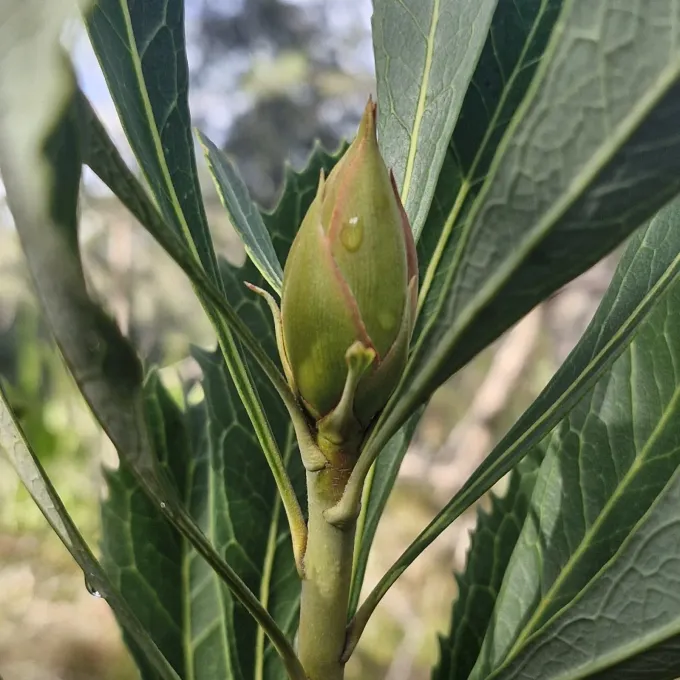
Description
Sowing dates
Propagation of Waratah (Telopea speciosissima) is primarily performed via cuttings or seed germination. For commercial production, cuttings from healthy, mature plants are preferred to ensure genetic consistency and reliable flower output.
Seeds require specialized treatment and should be sown in a sterile, well-draining medium. The germination process is sensitive to temperature fluctuations and requires a stable environment to prevent fungal damping-off.
Cuttings are best taken during the spring months using growth hormones to stimulate root development. A high-humidity environment and bottom heat are often used in professional nursery settings to enhance the success rate.
Once seedlings or cuttings have established a strong root system, they are transitioned to larger containers. Careful handling is necessary as Proteaceae roots are delicate and prone to damage during repotting.
Gradual acclimatization is key for young plants before they are moved to permanent greenhouse or orchard locations to ensure they can withstand varying light conditions.
Growing requirements
As a member of the Proteaceae family native to New South Wales, the Waratah thrives in sandy, acidic, and nutrient-poor soils. It has a high sensitivity to phosphorus and requires specific low-phosphorus fertilizers.
The plant demands full sun exposure to initiate successful blooming. In greenhouse environments, high-intensity supplemental lighting is often employed during winter months to meet the plant's rigorous photoperiodic requirements.
Optimal climate control is essential, with temperatures typically ranging between 18°C and 25°C. Waratah is not frost-tolerant and requires protection in cooler climates, making it a greenhouse-dependent crop in many regions.
Water management is critical, as Waratah requires consistent moisture but absolute drainage. Any water stagnation in the root zone leads to catastrophic failure due to susceptibility to soil-borne pathogens.
Good air circulation within the canopy is necessary to prevent the buildup of humidity, which can otherwise trigger leaf fungal diseases and hinder normal gas exchange.
Yield
The commercial yield of Waratah is calculated based on the production of high-quality stems per plant. A well-maintained mature bush can produce between 10 to 20 prime stems per flowering season.
Production consistency improves as the plant reaches 4 to 5 years of age. Pruning is not only for yield but also for plant architecture; cutting back stems post-harvest is essential for forcing new reproductive growth.
Flower quality, defined by stem length, petal color intensity, and head diameter, is the primary factor in determining market value. Large, vibrant red flowers are the most sought-after in international luxury floriculture markets.
By implementing controlled climate techniques and precision irrigation, growers can extend the harvest window and achieve more uniform production batches throughout the year.
The economic longevity of a Waratah plantation is typically 8 to 12 years, provided that soil health and root system integrity are maintained through expert agronomic practices.
Main diseases and pests
Root rot caused by Phytophthora species is the most severe threat to Waratah production. It is highly aggressive and often fatal in poorly drained or waterlogged soil conditions.
Pests such as mealybugs and spider mites frequently affect the foliage and young buds. These insects weaken the plant's vigor and can cause aesthetic damage that renders the stems unsellable.
Integrated pest management, focusing on sanitation and biological control agents, is highly recommended over broad-spectrum chemicals, which the plant may find toxic or stressful.
Botrytis, or gray mold, can infect the large, dense flower heads during periods of high humidity. Proactive ventilation and humidity reduction are the best defenses against this fungal outbreak.
Regular diagnostic screening of soil and plant tissue is an essential agronomic practice to detect pathogens early before they spread throughout the entire plantation.
Harvesting
Harvesting Waratah is a precise operation that occurs when the individual florets within the flower head begin to show color. Cutting too early or too late can negatively impact vase life.
Sterile secateurs are used to cut stems cleanly. Stems are typically cut to a specific length according to market standards, usually leaving a portion of the old growth to stimulate new dormant buds.
Post-harvest care involves immediately placing stems into clean water with floral preservatives. This treatment is essential to hydrate the thick stems and extend the life of the blooms.
Proper packaging is vital for transport, as the massive, heavy heads are susceptible to bruising. Individual sleeve protection is standard to maintain the pristine appearance of the flowers.
Cold storage at temperatures between 2°C and 5°C is utilized to slow down the metabolism of the flowers, allowing for international shipping and distribution to global markets.