
Slender-leaved banksia
Banksia leptophylla
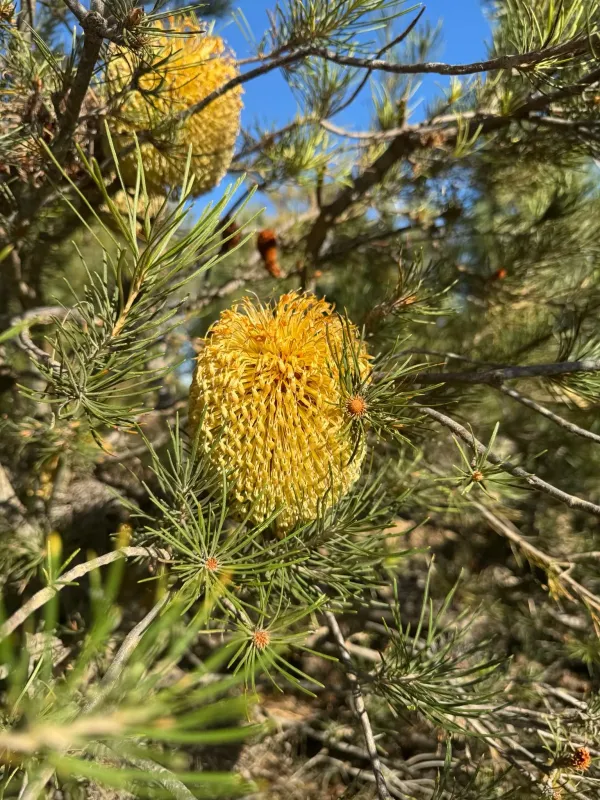
Description
Sowing dates
Banksia leptophylla, a member of the Proteaceae family, is an evergreen shrub native to Western Australia. Sowing seeds requires precise temperature control to mimic the natural germination cycles of its native habitat.
Seeds often benefit from stratification to simulate cool periods before germination. They should be sown in a well-draining, sandy substrate, as high soil moisture is detrimental to young seedlings.
The optimal time for sowing in a controlled environment is early spring, when daylight hours begin to increase. Maintaining consistent, light moisture without waterlogging the soil mix is critical for success.
Germination can be slow and sporadic, requiring patience from the grower. Utilizing specialized seedling trays with bottom-up watering systems can significantly improve the success rate of the culture.
Once true leaves appear, seedlings should be transplanted into individual containers. It is essential to use a low-phosphorus potting mix, as species within the Proteaceae family are highly sensitive to phosphate toxicity.
Growing requirements
This plant has strict soil requirements, demanding acidic to neutral pH levels with excellent aeration and drainage. Sandy soils are considered the most suitable medium for healthy root development.
As a heliophilous species, it requires direct sunlight for most of the day. Inadequate light intensity often results in leggy growth and a significant reduction in flower production.
Native to a Mediterranean-style climate, the plant thrives in dry summers and mild, wet winters. High humidity paired with low temperatures should be avoided to prevent foliage and root diseases.
Watering should be balanced; while the plant is drought-tolerant, it requires consistent moisture during active growth. Ensuring that water does not pool in the root zone is a fundamental rule of its care.
Temperature management is key for northern latitudes or greenhouse settings. The plant does not tolerate hard frosts and must be protected in climate-controlled spaces during winter months.
Main diseases and pests
Pathogenic fungi of the Phytophthora genus represent the most significant threat, often causing terminal root rot. Infection is almost always facilitated by poor drainage and excessive soil moisture.
Phosphate toxicity is a major agronomic concern; therefore, the use of standard fertilizers is strictly prohibited. Growers must use specific fertilizers formulated for Proteaceae to ensure plant longevity.
In greenhouse or indoor conditions, pests like spider mites and mealybugs can infest the foliage. Regular monitoring and maintaining proper air circulation are the best methods for prevention.
Improper irrigation management leads to chlorosis, manifesting as yellowing or browning leaves. This is typically a sign of root distress caused by waterlogging or nutrient imbalances.
Preventative care includes ensuring optimal airflow around the plant canopy. It is also important to handle root systems with care during transplanting, as damaged roots are highly susceptible to secondary infections.