
Western Banksia
Banksia occidentalis
Description
Growing requirements
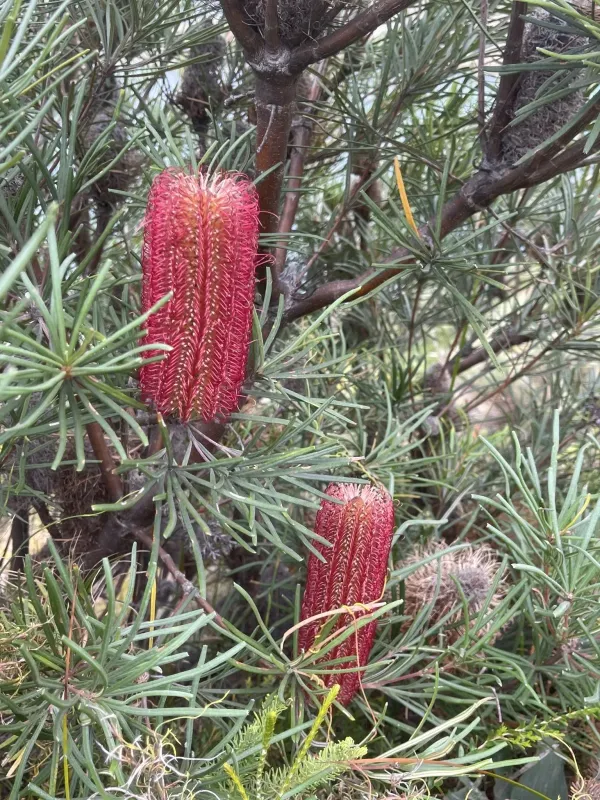
Western Banksia (Banksia occidentalis) is an evergreen woody plant belonging to the Proteaceae family, indigenous to the southwestern coastal regions of Western Australia. It typically grows as a dense shrub or a small, slender tree, recognized by its serrated linear foliage and vivid, cylindrical inflorescences.
This species thrives in well-drained, sandy soils with low fertility, especially low phosphorus levels. In agricultural settings, it requires a site that provides ample sunlight and protection from heavy soil compaction, which hinders the development of its specialized proteoid roots.
Climate adaptability is a strong point for this crop; it is highly resilient to coastal conditions, including salt-laden winds. However, it requires a Mediterranean-style climate with well-defined seasonal patterns to reach its full decorative potential.
The cultivation of this plant involves specific agronomic practices, such as minimal fertilizing. Because the plant is evolved to cope with nutrient-poor environments, excessive nitrogen or phosphorus will lead to severe growth abnormalities or death.
Commercially, the plant is primarily harvested for its inflorescences. The flowers are highly prized in the international floral industry due to their distinct architecture, vibrant color, and exceptional vase life post-harvest.
Main diseases and pests
The most critical threat to Banksia occidentalis in cultivation is the soil-borne pathogen Phytophthora cinnamomi. This fungus causes root rot and is often lethal, requiring strict quarantine of infected areas and improved drainage.
Pests such as mealybugs and various wood-boring insects may attack the stems and leaves. Regular inspections are necessary to ensure that the infestation does not reach economic thresholds that would affect flower production quality.
Cultural control is the primary strategy for pest and disease management. This includes maintaining optimal plant spacing for air circulation and ensuring that irrigation is kept to a minimum during dormant phases.
Integrated pest management (IPM) practices should be employed if chemical intervention is necessary, emphasizing the use of products that are safe for Proteaceae species to prevent phytotoxicity.
Sanitation plays a vital role in preventing the spread of diseases. All pruning tools must be disinfected regularly, and diseased plant debris should be removed from the field and destroyed immediately.