
Stenocarpus
Stenocarpus R. Br.
Description
Growing requirements
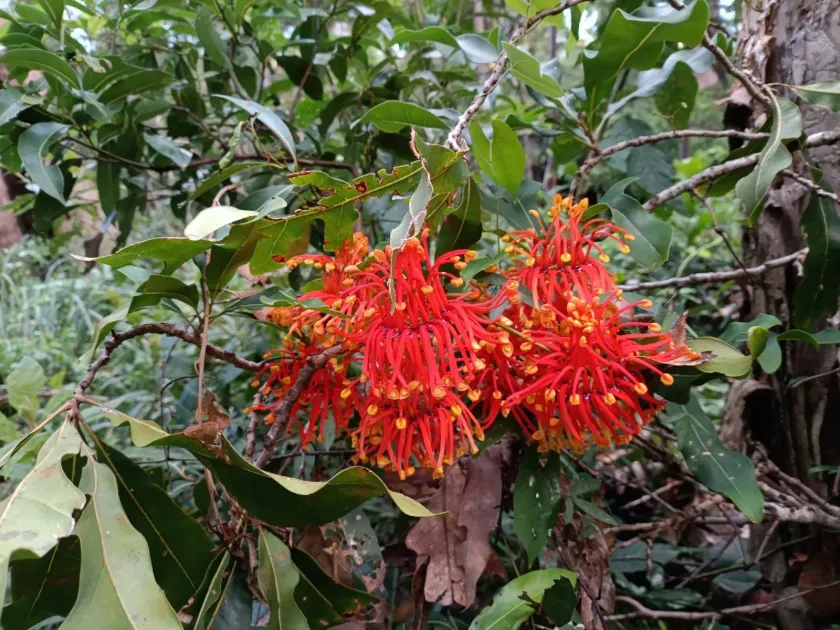
Stenocarpus is a genus of evergreen trees and shrubs within the Proteaceae family. Native primarily to Australian rainforests, these plants are renowned for their striking, wheel-shaped inflorescences that give them high ornamental value.
The climate requirements for this culture include high humidity and consistently warm temperatures. Stenocarpus is extremely sensitive to frost, making it suitable mainly for tropical gardens or indoor greenhouse cultivation in temperate regions.
The plant thrives in acidic, well-draining soils that are rich in organic matter. Proper drainage is absolutely essential, as the root system is highly susceptible to rot caused by waterlogged conditions.
Regarding light, these trees prefer bright, indirect sunlight. In their natural habitat, they are often found in the understory of forests, so they appreciate protection from scorching, direct sunlight during the hottest parts of the day.
Cultivation requires specialized fertilizers that are low in phosphorus, as species in the Proteaceae family have evolved to thrive in nutrient-poor soils and can be easily damaged by conventional high-phosphorus fertilizers.
Main diseases and pests
The primary threats to Stenocarpus involve fungal diseases, particularly Phytophthora root rot. This condition is almost exclusively the result of overwatering or inadequate soil drainage, which inhibits oxygen flow to the roots.
Pests such as scale insects and mealybugs are the most common culprits affecting the foliage and stems. They feed on plant sap, leading to weakened growth, yellowing leaves, and reduced aesthetic appeal.
Spider mites can also be problematic if the environmental humidity is too low. These pests can cause significant damage to the leaves by piercing cells, leaving behind stippling patterns and fine webs.
Chlorosis is a frequent issue if the irrigation water is too alkaline or lacks necessary trace elements. This is often managed by adjusting the water pH and using chelated micronutrient fertilizers.
Maintaining a clean growing environment and monitoring the plants regularly for signs of infestation is the most effective management strategy for keeping these exotic trees healthy.