
Swamp banksia
Banksia robur
Description
Growing requirements
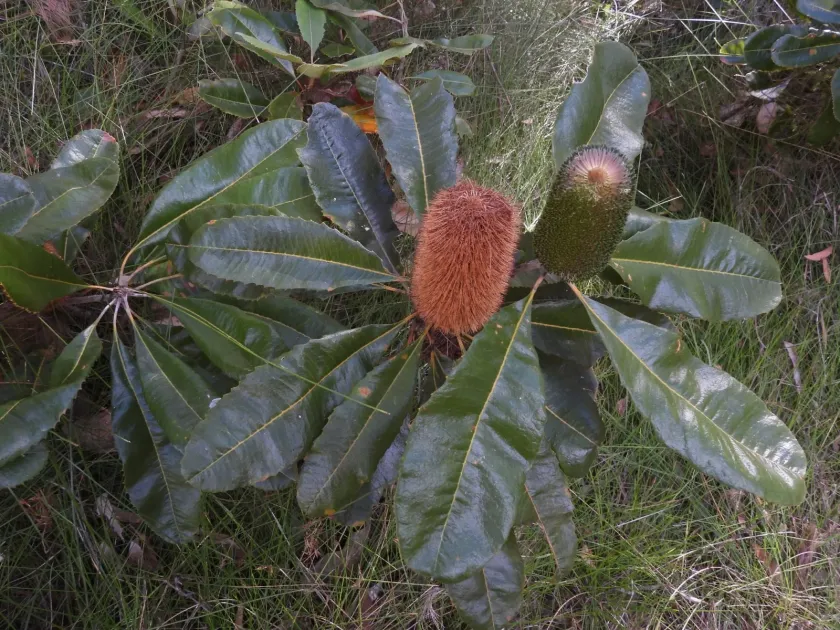
Swamp banksia (Banksia robur) is a robust evergreen shrub belonging to the Proteaceae family. It is native to the coastal regions of eastern Australia, where it thrives in moist, swampy soil environments.
The plant is known for its broad, leathery leaves and large, greenish-blue flower spikes. In cultivation, it requires conditions that mimic its natural swampy habitat, emphasizing constant moisture levels.
Soil requirements for Banksia robur are specific: it prefers acidic, sandy, or peaty soils. Good drainage is essential despite the plant's natural preference for waterlogged sites in the wild.
A key biological feature is the presence of proteoid roots. These dense, clustered roots allow the plant to thrive in phosphorus-poor soils, making standard commercial fertilizers potentially toxic to the plant.
As a climate-sensitive species, it requires frost-free environments. In regions with cold winters, it must be grown in greenhouses or as a container plant that can be moved indoors during the cold season.
Main diseases and pests
The most significant threat to the survival of Banksia robur is the soil-borne pathogen Phytophthora cinnamomi. This mold causes root rot, which is often fatal and difficult to treat once the symptoms manifest.
Common indoor pests include spider mites and mealybugs. These thrive in warm, stagnant air and can quickly weaken the plant if not managed through regular inspection and washing of the leaves.
Boring insects can infiltrate the stems, causing structural damage and providing entry points for wood-rotting fungi, which further degrade the health of the plant.
Nutrient toxicity, particularly from high levels of phosphorus, manifests as leaf yellowing and necrosis. This is considered a cultural disease rather than a pest-related issue.
Sanitation practices are the best defense: sterilizing soil mixes, using clean water sources, and removing any plant debris around the base are essential for a healthy crop.