
Gippsland waratah
Telopea oreades F. Muell.
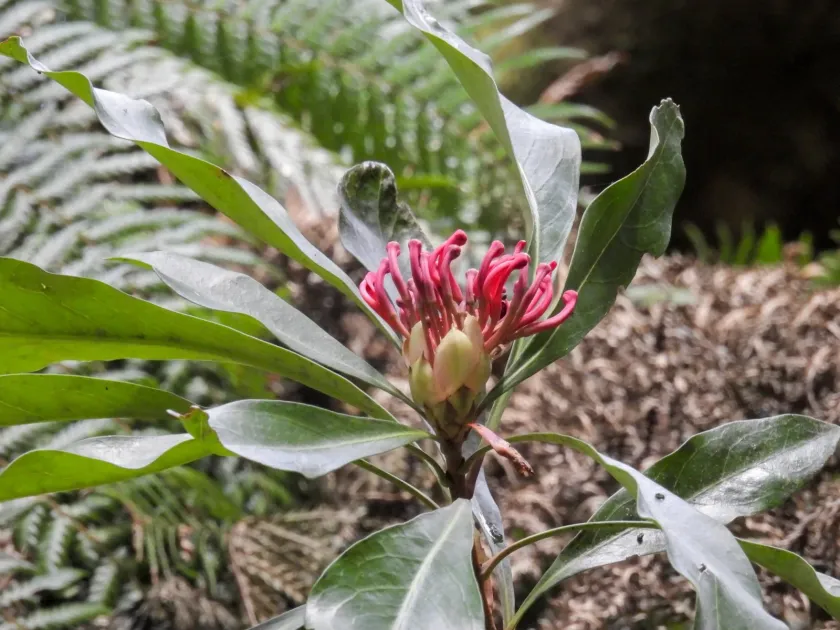
Description
Sowing dates
Propagating Gippsland waratah is typically achieved through seeds or semi-hardwood cuttings under managed nursery conditions to ensure successful establishment.
Seeds should be sown in a well-draining, acidic growing medium consisting of peat and coarse sand to mimic natural forest floor conditions.
Cuttings are preferred for commercial production as they reliably retain the specific ornamental traits of the parent plant, ensuring uniformity in floral output.
Rooting hormone treatment is highly recommended for cuttings to stimulate root development and reduce the time spent in the propagation bench.
Young plants require a gradual hardening-off process before being moved to permanent outdoor beds to withstand fluctuations in temperature and wind exposure.
Growing requirements
Gippsland waratah is a member of the Proteaceae family and thrives naturally in the moist, cool forest regions of Victoria, Australia.
The crop requires highly acidic, free-draining soil to prevent root rot, as the root system is extremely sensitive to waterlogged environments.
Climatic requirements focus on mild temperatures and high humidity, which can be challenging in regions with extremely hot and dry summers.
Soil nutrient management is critical; phosphorus-free fertilizers are mandatory because this species has a high sensitivity to phosphorus toxicity.
Exposure to full sun is ideal for flower development, but in hotter climates, providing partial afternoon shade protects the foliage from heat stress.
Main diseases and pests
The most significant threat to this species is root rot, particularly caused by Phytophthora cinnamomi, which thrives in wet, heavy soils.
Insects such as mealybugs and scale can affect the stems and leaves, weakening the plant and creating entry points for secondary fungal infections.
Cultural control, such as ensuring proper spacing for air circulation and avoiding overhead irrigation, is essential to minimize disease outbreaks.
Regular inspections of the plant crown and foliage are necessary to detect early signs of infestation and implement targeted treatments.
In case of severe infestations, horticultural oils or mild systemic insecticides can be used, provided they are applied with caution to avoid plant burn.
Harvesting
The primary agricultural use of the Gippsland waratah is the production of long-lasting, visually striking flowers for the cut-flower industry.
Harvesting should occur when the outer bracts are fully colored but the central florets are still immature to ensure maximum post-harvest life.
Sharp, sterilized tools are essential to minimize tissue damage and prevent the spread of pathogens between individual plants during the cutting process.
After harvest, stems must be placed in clean, cool water immediately to maintain turgidity and ensure quality for wholesale markets.
Temperature control during post-harvest storage, ideally kept between 2 and 5 degrees Celsius, significantly extends the vase life of the blooms.