
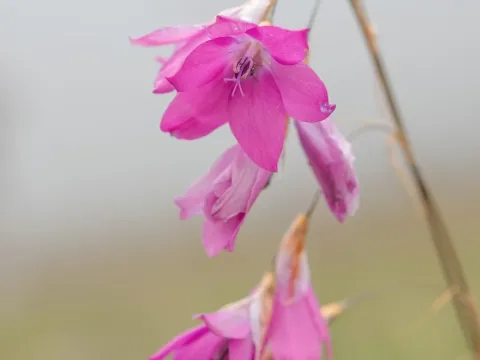
Dierama
Dierama
Dierama, commonly known as Angel's Fishing Rod, belongs to the Iridaceae family. This graceful cormous perennial is traditionally propagated through seeds or by division of mature clumps during the early spring season.
What the section contains
 Dierama argyreum
Dierama argyreum
Dierama argyreum
 Dierama dracomontanum
Dierama dracomontanum
Dierama dracomontanum
 Dierama erectum
Dierama erectum
Dierama erectum
 Dierama floriferum
Dierama floriferum
Dierama floriferum
 Dierama hybrids
Dierama hybrids
Dierama hybrids
 Dierama igneum
Dierama igneum
Dierama igneum
 Dierama mossii
Dierama mossii
Dierama mossii
 Dierama pallidum
Dierama pallidum
Dierama pallidum
 Dierama pauciflorum
Dierama pauciflorum
Dierama pauciflorum
 Dierama pendulum
Dierama pendulum
Dierama pendulum
 Dierama reynoldsii
Dierama reynoldsii
Dierama reynoldsii
 Dierama trichorhizum
Dierama trichorhizum
Dierama trichorhizum
 Robust Wandflower
Dierama robustum
Robust Wandflower
Dierama robustum
Dierama
Seed propagation requires a stratification period of several weeks in cool conditions to break dormancy. Seeds should be sown in trays filled with a well-draining seed-starting mix and kept in a greenhouse until they germinate.
Division is the preferred method for propagating specific cultivars to ensure genetic consistency. Carefully lifting the clump and separating the corms should be done when the plant is just starting its new growth phase in spring.
When transplanting young plants into the garden, it is vital to handle the root system with extreme care, as Dierama is known to be sensitive to root disturbance. Preparing the planting hole with organic matter will facilitate faster establishment.
The planting depth should be roughly 5-8 cm, and maintaining an adequate distance of 40 cm between individuals allows the arching stems to display their flowers without competition from neighboring plants.
Dierama originates from the grasslands of South Africa, making it a sun-loving plant. It thrives in full sun, which is crucial for the development of its iconic, long, arching flower spikes that resemble fishing rods.
The soil must be exceptionally well-draining. While Dierama prefers a moderate level of fertility, it performs best in gritty or sandy loams where water can move through the profile freely without waterlogging the corms.
Watering requirements are moderate; the plant appreciates consistent moisture during the spring and early summer growing season. However, it is essential to allow the soil to dry out slightly between watering sessions.
Hardiness varies by species, but generally, the plant requires protection from freezing temperatures in colder climates. Applying a layer of mulch around the crown can help insulate the corms during winter dormancy.
Feeding the plant with a balanced liquid fertilizer early in the season supports healthy growth. Avoid high-nitrogen fertilizers later in the year, as this promotes excessive foliage at the expense of flowering performance.
The primary concern for Dierama cultivation is root and corm rot caused by over-irrigation or heavy, poorly draining soils. Proper site selection and soil amendment are the best defenses against these fungal issues.
Pests such as aphids and thrips may periodically infest the long, slender flower stalks. Using insecticidal soaps or neem oil is usually effective in controlling these populations without causing harm to the environment.
Slugs and snails can be problematic for emerging growth in the spring. Implementing mechanical barriers like crushed eggshells or using organic slug baits around the base of the plant is recommended to preserve foliage.
Poor ventilation within the foliage can lead to gray mold (Botrytis) if weather conditions remain humid for extended periods. Thinning out overcrowded clusters can significantly improve air circulation.
Regular monitoring of the plants for color changes or yellowing of the foliage is essential. Early detection of stress factors allows for prompt intervention before an infestation or disease becomes widespread across the garden bed.