
Dierama mossii
Dierama mossii
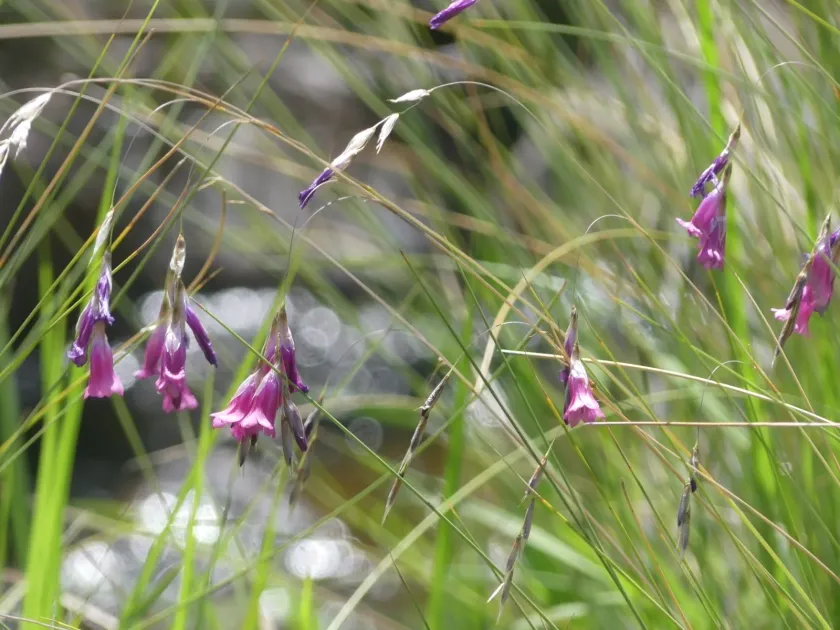
Description
Growing requirements
Dierama mossii is a rare and elegant member of the Iridaceae family, native to the high-altitude grasslands of South Africa. It is a perennial plant known for its striking, arching stems that carry delicate, bell-shaped flowers, often referred to as 'Angel's Fishing Rods'.
Botanically, the plant develops from a sturdy corm and features evergreen, grass-like foliage that remains attractive throughout the season. The plant's architecture is uniquely suited for wind resistance in its natural mountain habitat, which translates to a resilient performance in well-planned gardens.
Cultural requirements emphasize the need for full sun exposure and extremely well-draining soil. In heavy or clay soils, it is essential to incorporate coarse grit or sand to prevent the corms from sitting in moisture, which is the primary cause of plant failure.
The climate preference for Dierama mossii is moderate. It thrives in regions with cool, moist summers and mild winters, as it is not tolerant of prolonged hard frost. Gardeners in harsher climates should consider cultivating it in containers that can be moved to a frost-free shelter.
Horticulturally, it is prized as a focal point in borders, rock gardens, and container displays. Its ability to create movement in the landscape due to its arching, pendulous stems makes it a highly sought-after plant for aesthetic garden design projects.
Main diseases and pests
The most common threats to Dierama mossii involve fungal pathogens, particularly root rots resulting from poor soil drainage. If the soil remains saturated for extended periods, especially in winter, the plant's corm will rapidly decay.
Insect pests such as thrips and aphids are known to feed on the tender growth and developing flower buds. These infestations can reduce the aesthetic quality of the blooms and weaken the plant if left untreated for long periods.
Cultural prevention of disease involves avoiding overhead irrigation during cloudy or humid conditions and ensuring that air circulation around the base of the plant is sufficient to prevent stagnation.
Effective pest management is achieved through regular scouting of the foliage during the early growing season. If a significant pest population is detected, applying horticultural soap or appropriate systemic insecticides is recommended.
Maintaining a clean growing environment by removing dead or yellowing leaves prevents the accumulation of detritus, which can otherwise harbor pests and serve as a starting point for fungal outbreaks.