
Robust Wandflower
Dierama robustum
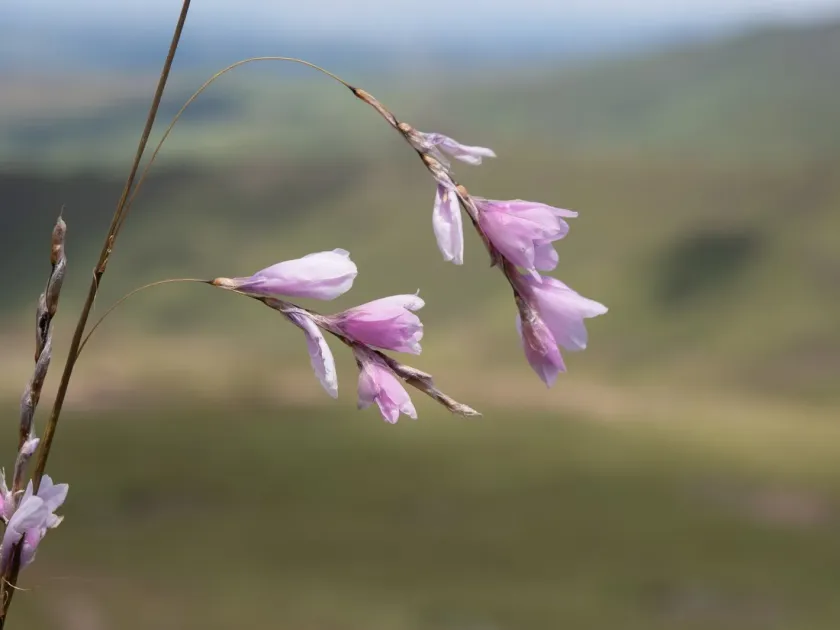
Description
Growing requirements
Dierama robustum, commonly known as the robust wandflower, is a perennial herbaceous plant belonging to the Iridaceae family. Native to the grasslands of South Africa, it is prized for its architectural beauty and unique form.
The plant grows from corms, producing long, arching, grass-like foliage. Its most notable feature is the tall, gracefully drooping flower spikes that hold bell-shaped blooms, which gently sway in the breeze.
To thrive, this plant requires a sunny, sheltered location with protection from harsh winds. The ideal soil is fertile, sandy, or loamy, and must possess excellent drainage properties to prevent corm rot.
Dierama robustum is moderately frost-tolerant but prefers climates where the ground does not freeze deeply. In colder regions, gardeners often cultivate it in containers or apply heavy mulch to protect the crowns during winter.
In landscape architecture, the plant is used for its aesthetic appeal in perennial borders, rock gardens, or along water features. Its drooping inflorescences create a soft, romantic texture in the garden.
Main diseases and pests
The primary threat to the robust wandflower is fungal disease, typically triggered by waterlogged soil conditions. Proper site selection and soil amendment with grit are essential to ensure the longevity of the plants.
Aphids are the most common insect pests, frequently colonizing the tender flower spikes. Regular monitoring and the application of insecticidal soaps can manage these populations before they cause significant damage.
Spider mites may become an issue during prolonged hot and dry spells, leading to foliage discoloration. Increasing humidity around the plant and applying appropriate miticides are standard control measures.
Root rot is a critical risk factor; it is often irreversible once established. Prevention through diligent irrigation management is far more effective than trying to cure an already infected plant.
Poor ventilation within a dense clump can lead to botrytis or mildew. Ensuring adequate spacing between plants promotes good air circulation and reduces the probability of disease outbreaks.