
Dierama hybrids
Dierama hybrids
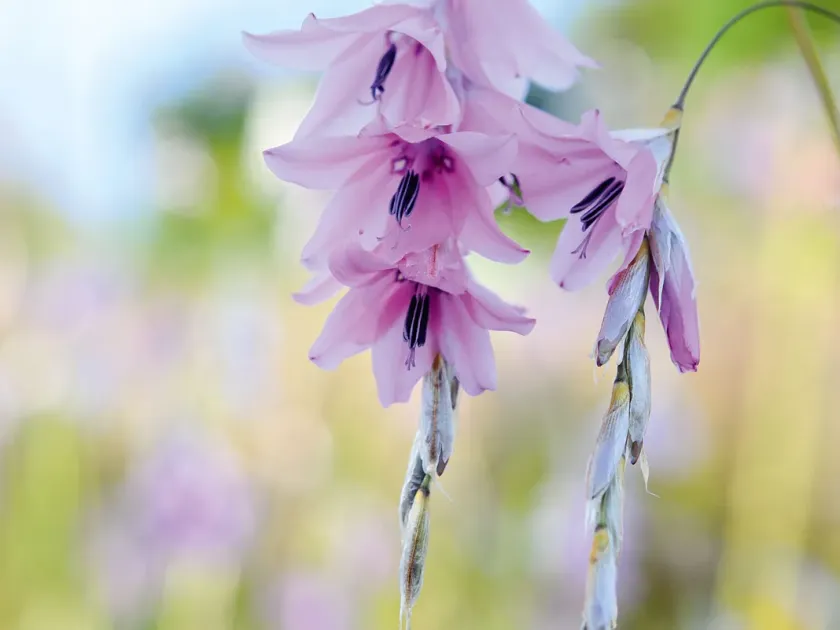
Description
Sowing dates
Sowing seeds of Dierama hybrids is best conducted in late winter or early spring within a protected environment. Successful germination often requires a period of cold stratification to break dormancy.
Seeds should be sown in a light, well-draining potting medium, maintaining temperatures between 18 and 20 degrees Celsius. Consistent moisture is vital, though overwatering must be avoided.
Pricking out seedlings should occur once two or three true leaves have developed. Young plants are delicate, and their root systems are highly sensitive to disturbance during handling.
Transplanting to an outdoor location should only take place once the risk of frost has passed. For first-year plants, providing temporary winter protection or using containers is highly recommended.
Propagation can also be achieved by dividing mature clumps during the dormant season. However, this is a challenging task due to the deep-seated root systems, making seed propagation the standard method.
Growing requirements
Dierama hybrids belong to the Iridaceae family and are native to South Africa. They thrive in sunny, open locations that are shielded from strong winds, which can damage their graceful flower stems.
The ideal growing medium is a light, loamy, or sandy soil with excellent drainage. Dierama plants are highly susceptible to root rot if they are exposed to waterlogged conditions for extended periods.
The species has specific climate requirements and is generally not frost-hardy in colder regions. In areas with harsh winters, plants should be provided with heavy mulch or kept in containers to be moved indoors.
Irrigation must be balanced, providing regular moisture during the active growth and flowering season. During hot, dry spells, adequate watering is necessary, provided the soil remains aerated.
Fertilizing should be done in early spring as new growth begins, using a balanced fertilizer. It is crucial to avoid excessive nitrogen, as this may encourage lush foliage growth at the expense of floral development.
Main diseases and pests
Root rot is the most significant threat to Dierama hybrids, often resulting from poor drainage or excessively wet soil. Proper site selection and soil amendment are the primary methods of prevention.
In greenhouse conditions or environments with high humidity, plants may be susceptible to aphids or spider mites. Frequent inspection of the foliage is necessary for early detection and control.
Bacterial infections may occur if the rhizomes are damaged during division or physical maintenance. Always use sterilized cutting tools and apply a fungicide or charcoal to wounds.
Slugs and snails can cause significant damage to emerging shoots in the spring. Using physical barriers or organic pest control methods around the base of the plant can mitigate these risks.
Ensuring good air circulation around the plants is essential for overall health. Stagnant air environments can promote the growth of fungal pathogens on the leaves and delicate bloom stalks.