
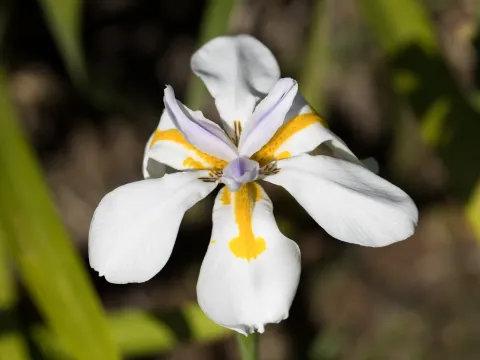
Dietes
Dietes Salisb. ex Klatt
Propagation of Dietes is typically performed through division of the rhizomes during early spring, allowing the plant to establish before the peak summer heat.
What the section contains


Dietes
When propagating by division, ensure each section contains a healthy portion of the root system and several viable leaf fans to guarantee successful growth.
Seed sowing is also an option, requiring a well-draining seed-starting mix and consistent warmth to facilitate successful germination within several weeks.
Young plants should be transplanted into larger containers or permanent garden locations once the root system is sufficiently developed and the risk of frost has passed.
Proper spacing between individual plants is crucial to avoid overcrowding, which can lead to increased humidity and susceptibility to fungal issues.
Dietes belongs to the Iridaceae family and consists of several rhizomatous perennial species characterized by sword-shaped, evergreen foliage.
These plants are native to Southern Africa and parts of Australia, thriving in climates that provide plenty of light and relatively mild winters.
They prefer well-draining soil that is rich in organic matter, though they demonstrate remarkable adaptability to various soil types including clay-loam.
Irrigation should be consistent throughout the growing season, though the plants possess a degree of drought tolerance once they are fully established.
Full sun is ideal for promoting vigorous flowering, although they can tolerate partial shade, particularly in regions with very intense solar radiation.
Fungal pathogens represent the primary threat to Dietes, particularly in conditions of high humidity, poor soil drainage, or stagnant air circulation.
Root rot is the most common disease, often triggered by overwatering or using heavy, non-porous soil media that holds moisture for too long.
Insect pests, such as aphids and spider mites, can frequently affect the plants, especially when grown in protected or indoor environments.
Thrips may also cause cosmetic damage to the leaves and floral structures, necessitating timely monitoring and potential chemical intervention.
Maintaining a clean garden bed by removing decaying foliage and ensuring adequate spacing helps to minimize the incidence of these common threats.