
Dierama pauciflorum
Dierama pauciflorum
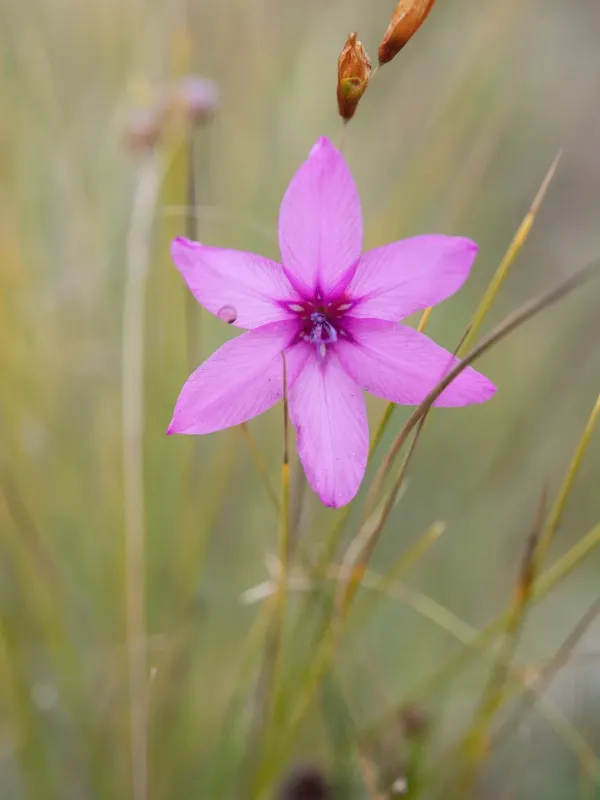
Description
Growing requirements
Dierama pauciflorum is a perennial cormous plant belonging to the Iridaceae family. Native to the high-altitude grasslands of South Africa, it is known for its elegant, arching stems and delicate, bell-shaped flowers that bloom in small clusters.
The botanical structure of this plant includes narrow, grass-like leaves rising from a corm, with thin, wire-like stalks that gracefully bend under the weight of the flowers. The specific name "pauciflorum" refers to the relatively small number of blossoms per stem compared to other species.
Cultivation requires well-drained, fertile soil with a neutral to slightly acidic pH. Proper drainage is the most critical factor for success, as the corms are prone to rotting if left in stagnant water, particularly during the dormant winter period.
The plant thrives in full sunlight but requires protection from harsh, dry winds that can damage the flexible floral spikes. While it is reasonably hardy in its native habitat, gardeners in colder climates often choose to grow it in containers to ensure winter protection.
In landscaping, Dierama pauciflorum is highly valued for its naturalistic look, making it an excellent choice for rock gardens, borders, or as a specimen plant. Its ability to create movement in the garden makes it a favorite for designers focusing on meadow-style planting schemes.
Main diseases and pests
The most significant threats to the health of Dierama pauciflorum are fungal pathogens such as root rot, often triggered by excessive moisture and poor soil aeration. Improving soil structure and avoiding over-irrigation are key preventative measures.
Pests like aphids and spider mites may occasionally infest the foliage, particularly when the plant is stressed by heat or drought. Regular monitoring and the application of appropriate biological or chemical controls can help manage these issues effectively.