
Laeliocattleya
Laeliocattleya
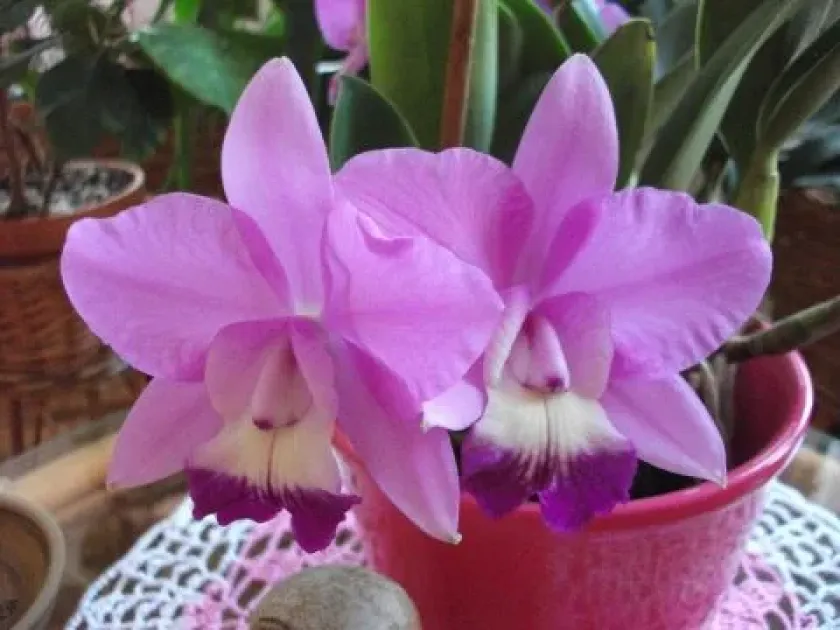
Description
Growing requirements
Laeliocattleya is an intergeneric hybrid orchid resulting from crossing members of the genera Laelia and Cattleya. Belonging to the Orchidaceae family, this ornamental crop is widely cultivated globally for its large, fragrant, and vibrant flowers that bloom in various color patterns.
The successful cultivation of this orchid requires bright, indirect sunlight. Exposure to direct midday sun can cause severe leaf scorch, while insufficient light levels prevent the pseudobulbs from maturing, which effectively inhibits the orchid's ability to produce flowers.
Temperature management is a key agrotechnical aspect for this crop. Most varieties thrive in daytime temperatures between 20°C and 28°C, with a necessary drop of 5–8 degrees at night to trigger the metabolic processes required for successful flowering induction.
The substrate must provide optimal drainage and aeration for the root system, which is highly sensitive to hypoxia. A typical potting mix consists of coarse pine bark, perlite, and charcoal, which ensures that water does not accumulate around the roots during the dormant period.
Humidity management is essential, with an ideal range of 50% to 70%. In commercial or greenhouse settings, high humidity is maintained through automated misting systems and proper airflow circulation, which prevents the stagnation of moisture that encourages mold growth.
Main diseases and pests
Fungal infections, particularly root rot caused by Phytophthora or Rhizoctonia species, are the most significant threats to the crop. These pathogens proliferate in overly dense substrates or in environments where the potting medium remains saturated for extended periods.
Pest management focuses on controlling common orchid enemies such as thrips, scale insects, and mealybugs. Integrated pest management strategies, including the use of horticultural oils or specialized insecticides, are recommended to maintain the health of the plant population.