
Dierama erectum
Dierama erectum
Description
Growing requirements
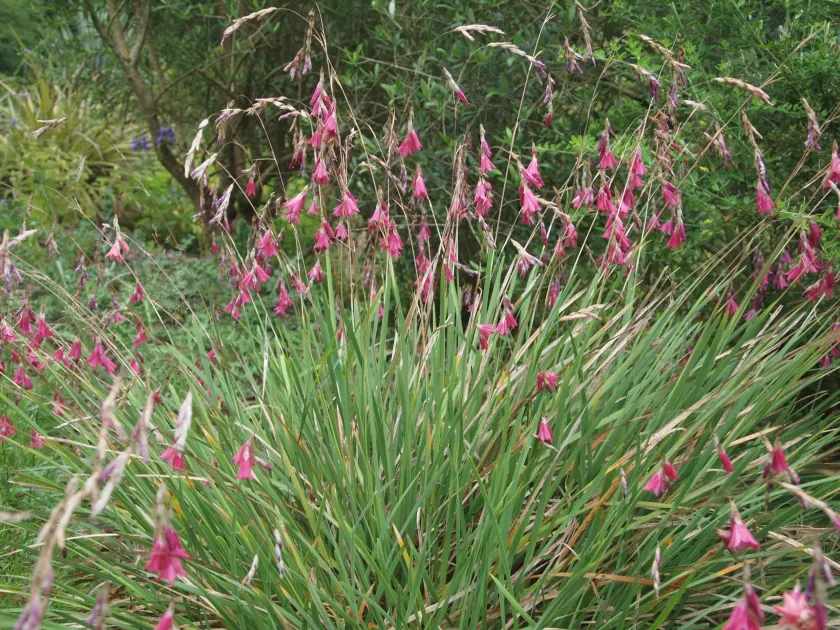
Dierama erectum is a perennial herbaceous plant belonging to the Iridaceae family. Unlike other species of the genus, it is distinguished by its rigid, upright flower spikes, which create a distinctive architectural silhouette in the garden.
The plant originates from Southern Africa, thriving in grassy habitats. It is primarily utilized in ornamental horticulture for its elegant bell-shaped flowers, which are highly prized by collectors and landscape designers globally.
Cultivation requires full sun and protection from strong, drying winds. The soil must be well-drained and fertile; sandy or loamy soils with added organic matter provide the best environment for the corms to develop properly.
Climatic requirements focus on warmth and drainage. In cooler climates, it is essential to plant Dierama erectum in a sheltered position or protect it from freezing temperatures with thick mulch during the dormant season.
Agronomic management includes maintaining a balance in watering. During the active growing period, the plant needs consistent moisture, but the soil must never remain waterlogged to prevent rot of the corms.
Main diseases and pests
The primary threats to Dierama erectum are fungal pathogens, specifically those causing bulb and root rots. These are usually a consequence of poor drainage or excessively heavy, water-retaining soil substrates.
Pests such as thrips and spider mites can cause significant damage to the foliage and flower buds. These insects thrive in hot, dry conditions and can lead to chlorosis and stunted growth if left unmanaged.
Effective pest control involves monitoring plant health and applying appropriate systemic insecticides when necessary. Ensuring good ventilation between plants also significantly reduces the incidence of fungal outbreaks.
Cultural control methods include careful weeding to remove potential hosts for pests and viruses. Maintaining proper spacing ensures air circulation, which is crucial for preventing humidity-related diseases.
Proper hygiene, such as removing debris and dead foliage after the season, prevents the accumulation of pathogens. Healthy plants with established root systems are generally resilient to moderate pest pressure.