
Dierama argyreum
Dierama argyreum
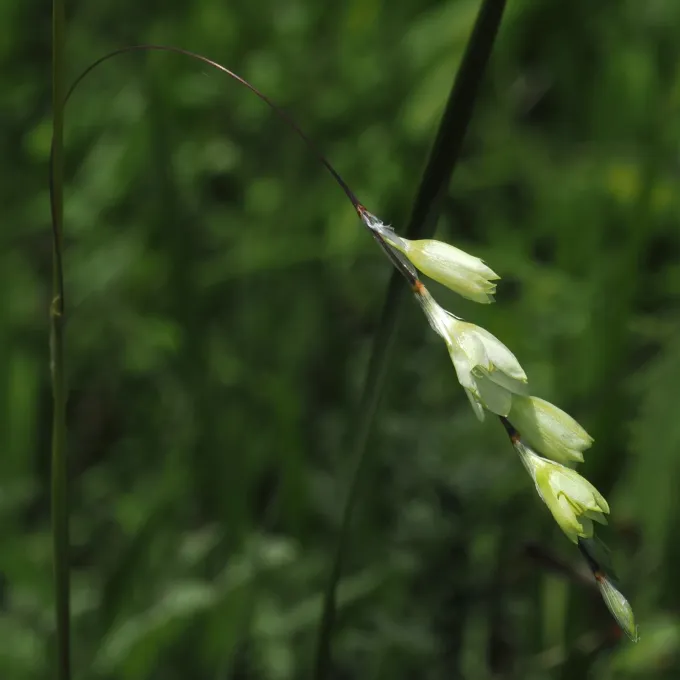
Description
Sowing dates
The cultivation of Dierama argyreum from seeds typically starts in early spring, using well-drained seed trays to ensure optimal germination conditions.
Seeds should be kept at a steady temperature between 18 and 20 degrees Celsius, ensuring the soil remains moist but never waterlogged during the process.
Germination is often slow and irregular, requiring patience from the grower; seedlings should be transplanted into individual pots only after reaching sufficient strength.
Vegetative propagation via division of established clumps is more common for gardeners, which should be performed during the dormant season to avoid stress.
When dividing, ensure each section has enough roots and healthy growth points to establish successfully in its new location.
Growing requirements
Dierama argyreum belongs to the Iridaceae family and originates from Southern Africa, requiring a climate that provides plenty of sunlight and well-drained soils.
This species thrives in sunny, sheltered positions, where its characteristic pendulous flowers can develop without the risk of wind damage or breakage.
The soil must be fertile, light, and sandy-loam, providing excellent drainage, as the plant is highly susceptible to root rot in heavy, saturated conditions.
Watering management is crucial; the plant requires regular irrigation during its growth phase but demands a distinct dry period during its winter dormancy.
In colder zones, it is essential to cultivate this plant in containers that can be moved indoors during frost periods to preserve the delicate corms.
Main diseases and pests
The most significant threats to Dierama argyreum are soil-borne fungal pathogens caused by excessive humidity or poor soil drainage around the corm.
Grey mold is a common issue in poorly ventilated garden settings, often appearing when humidity levels remain high for extended periods during the growing season.
Insect pests, such as aphids and spider mites, can damage the foliage and sap the plant’s energy, potentially reducing the quality of the flowering display.
Integrated pest management, including regular inspection and the use of targeted acaricides or fungicides, helps maintain plant health throughout the year.
Proper spacing and garden hygiene, such as clearing debris from the base, significantly reduce the incidence of fungal attacks and overall plant stress.