
Dierama pallidum
Dierama pallidum
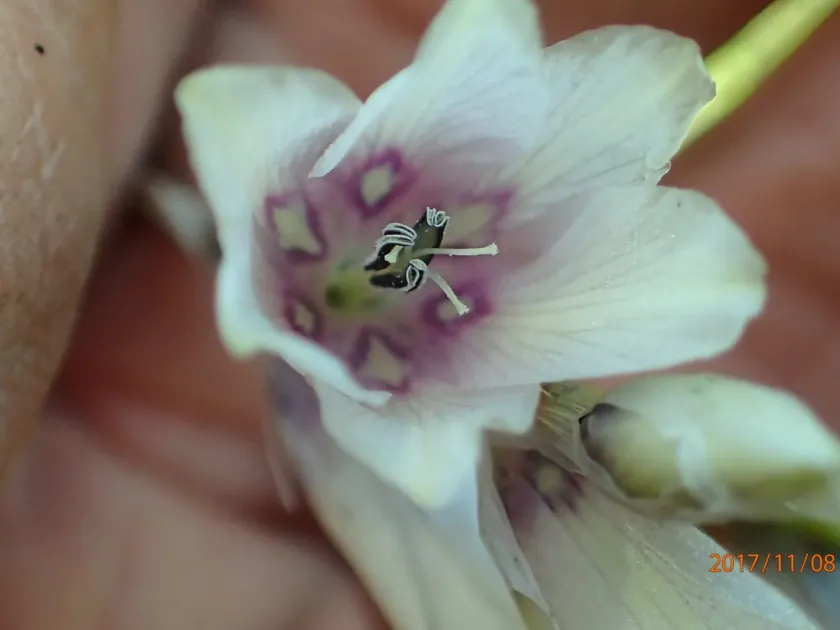
Description
Growing requirements
Dierama pallidum is a perennial herbaceous plant belonging to the Iridaceae family. Native to the high-altitude grasslands of South Africa, this species is known for its elegant appearance and adaptation to rocky, well-drained environments.
Botanically, it grows from a fibrous corm, producing thin, grass-like foliage that creates a dense clump. The characteristic inflorescences emerge on long, arching, pendulous stems that sway gracefully in the breeze, bearing delicate pale-colored bell-shaped flowers.
The cultural requirements of this species focus primarily on soil drainage and sunlight exposure. It thrives in open, sunny locations where the soil is gritty and lean, avoiding heavy clays that could retain excess water and lead to root damage during dormant periods.
Proper agro-technical management involves maintaining consistent moisture during the spring and summer growth cycles, followed by a drier period in winter. In regions with harsh frosts, mulching or container cultivation is essential to protect the sensitive corms from deep freezing.
The primary use of Dierama pallidum is in ornamental landscape design. It is highly valued for adding vertical interest and movement to borders, rock gardens, and around water features, where its slender architecture is highlighted against a background of foliage.
Main diseases and pests
The most significant threats to Dierama pallidum are soil-borne pathogens, specifically fungal rots that attack the corms in waterlogged conditions. Ensuring a sloped planting site or an engineered drainage layer is the primary preventive measure against these diseases.
Common pests affecting this ornamental crop include spider mites and aphids, which may cluster on the flower stems during periods of low humidity. Regular inspection and the use of targeted biological or chemical control agents are effective in maintaining the health of the plants.