
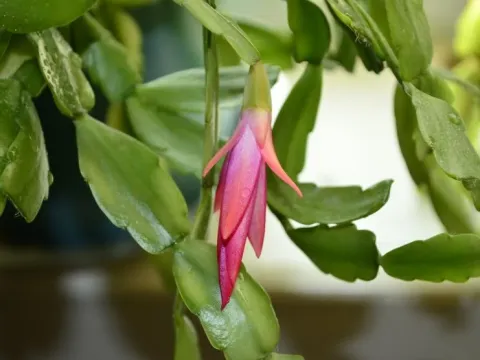
Schlumbergera
Schlumbergera
Schlumbergera is a genus of epiphytic cacti belonging to the Cactaceae family, native to the coastal mountains of south-eastern Brazil. Unlike desert species, these plants grow in shaded, humid environments, attaching themselves to tree branches or rocky crevices.
What the section contains
 Schlumbergera buckleyi
Schlumbergera exotica
Schlumbergera exotica
Schlumbergera buckleyi
Schlumbergera buckleyi
Schlumbergera exotica
Schlumbergera exotica
 Schlumbergera hybrids
Schlumbergera hybrids
Schlumbergera hybrids
 Schlumbergera kautskyi
Schlumbergera kautskyi
Schlumbergera kautskyi
 Schlumbergera lutea
Schlumbergera lutea
Schlumbergera lutea
 Schlumbergera microsphaerica
Schlumbergera microsphaerica
Schlumbergera microsphaerica
 Schlumbergera opuntioides
Schlumbergera opuntioides
Schlumbergera opuntioides
 Schlumbergera orssichiana
Schlumbergera orssichiana
Schlumbergera orssichiana
 Schlumbergera russelliana
Schlumbergera russelliana
Schlumbergera russelliana
Schlumbergera
Agrotechnical success depends on a well-aerated, slightly acidic substrate. A mixture of peat, pine bark, and coarse perlite is recommended to provide optimal structure, preventing root suffocation while maintaining the necessary levels of moisture required for epiphytic growth.
The plants thrive in bright, indirect light. Direct exposure to intense solar radiation can cause chlorosis or severe sunburn on the cladodes. In professional production, light intensity is managed using greenhouse shade cloths to maintain optimal photosynthesis rates.
Inducing flower buds requires specific environmental triggers, primarily a decrease in temperature to 12–15°C and shortened day lengths. Failure to provide this cooling period often results in vegetative growth without the anticipated floral development.
Schlumbergera is primarily cultivated for the ornamental market. Its ability to produce vibrant blooms during the winter months makes it an essential commercial crop for greenhouse production, often subjected to controlled photoperiod manipulation.
Mealybugs are among the most persistent pests affecting Schlumbergera, hiding in the junctions of segments and protected by a waxy white substance. Systemic insecticides or manual removal with alcohol solutions are standard control measures in professional care.
Root rot caused by Phytophthora species is a critical threat, usually stemming from over-irrigation or improper drainage. Once established, the fungus destroys the root system, causing the plant to collapse rapidly, necessitating strict sanitation practices.
Spider mites can become a significant issue during periods of low humidity, causing fine webbing and stippling on the epidermis. Regular monitoring and maintaining proper humidity levels help mitigate the risk of mite outbreaks in production facilities.
Bacterial soft rot appears as slimy, necrotic lesions on the succulent segments. This condition is often exacerbated by poor ventilation and physical injury to the plant. Immediate excision of infected segments and application of bactericides are required for recovery.
Effective disease management relies on preventative measures such as using sterile propagation media, ensuring proper airflow within the greenhouse, and avoiding excessive water retention in the potting mix to maintain high plant health standards.