
Schlumbergera buckleyi
Schlumbergera buckleyi
Description
Growing requirements
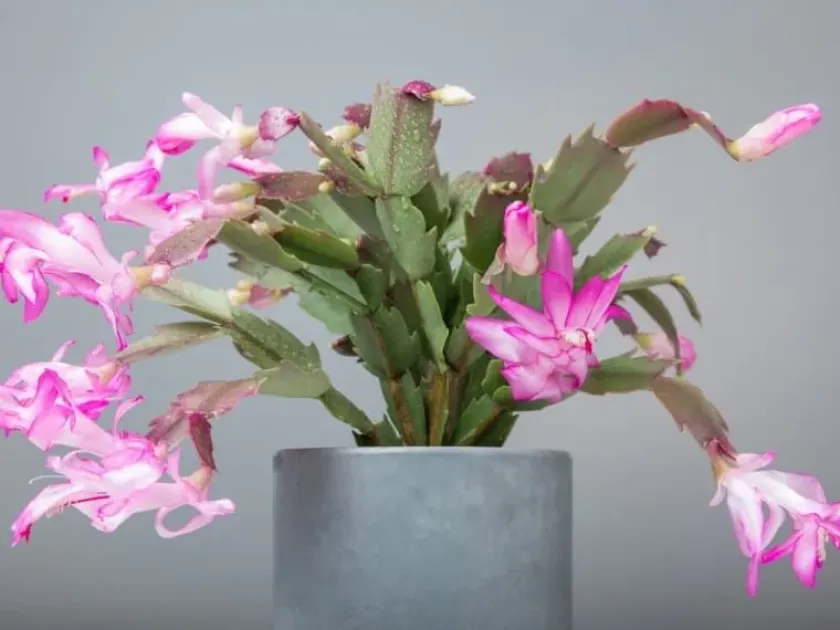
Schlumbergera buckleyi, commonly known as the Christmas cactus, belongs to the Cactaceae family. It is an epiphytic succulent native to the tropical rainforests of Brazil, where it grows in the shade of tree canopies, deriving moisture from humid air and organic debris.
The plant possesses flattened, segmented stems with smooth, scalloped edges that distinguish it from its closest relatives. The segments are typically dark green and glossy, providing a lush appearance even when the plant is not in its flowering phase.
Cultivation requires filtered sunlight, as intense exposure can bleach the foliage or cause thermal stress. It thrives in an environment with high atmospheric humidity, mirroring its natural tropical habitat, which is essential for maintaining vibrant health.
The soil should be a loose, well-draining mix rich in peat and bark chips to prevent waterlogging. A standard potting mix for orchids or succulents usually serves well, provided it has an acidic pH level to facilitate nutrient uptake.
Agrotechnical management includes controlled watering regimes, especially during the rest phase, and temperature regulation to trigger flowering. Keeping the plant in a cooler area with long, uninterrupted nights during autumn is a standard practice to induce blooming.
Main diseases and pests
Fungal pathogens such as Pythium and Phytophthora are the primary causes of root rot in Schlumbergera buckleyi. These occur frequently when the substrate remains saturated for prolonged periods, leading to the collapse of the stem base.
Mealybugs are the most persistent pests affecting this crop. They cluster in the crevices between stem segments, feeding on sap and excreting honeydew, which can further encourage the growth of sooty mold and secondary bacterial infections.
Spider mites are common in indoor conditions with low air humidity. These tiny pests pierce the leaf epidermis, causing characteristic yellowing and stippling that significantly reduces the photosynthetic efficiency of the plant.
Scale insects present a significant threat by forming protective hard shells on the stem surface. Removing them requires persistent application of horticultural oils or contact insecticides that penetrate the protective layer of the insect.
Maintaining a clean growing environment and monitoring for early signs of infestation are critical steps in integrated pest management for this culture. Proper ventilation is essential to minimize the risk of airborne fungal spores settling on the plant tissues.