
Schlumbergera hybrids
Schlumbergera hybrids
Description
Growing requirements
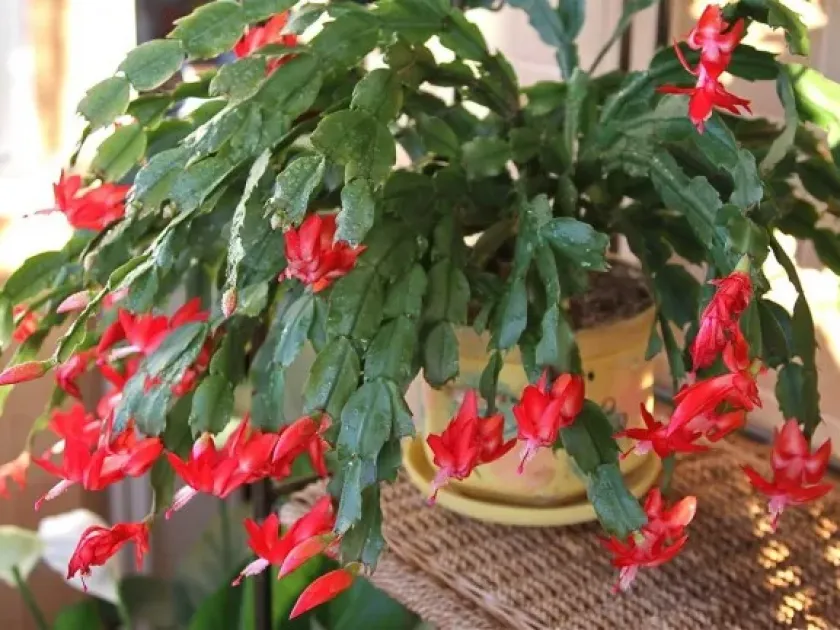
Schlumbergera hybrids are perennial epiphytic succulents belonging to the Cactaceae family. Originating from the coastal mountains of Brazil, these plants inhabit humid forest environments, growing on trees or rocks where they receive filtered light and high humidity throughout their lifecycle.
For successful cultivation, a specialized growing medium is required. It should be highly porous, well-draining, and rich in organic matter, typically based on a blend of peat moss, perlite, and pine bark to replicate their natural epiphytic niche.
Temperature management is critical for the floral induction phase. A significant drop in temperature to 15–17 degrees Celsius for several weeks in autumn is necessary to initiate bud development, as the plant reacts to shorter photoperiods and cooling trends.
The climate requirements include a preference for high relative humidity, ideally between 60% and 80%. Unlike desert cacti, these plants cannot survive prolonged droughts and require consistent moisture during the growing season while avoiding waterlogged soil conditions.
Light levels must be managed carefully. Intense direct sunlight will scorch the phylloclades (flattened stem segments), leading to irreversible tissue damage. Diffused, bright light provides the best conditions for photosynthesis and plant vigor.
Main diseases and pests
The primary threats to this culture are root pathogens, specifically Phytophthora and Pythium. These fungal diseases thrive in saturated soils and cause the rapid collapse of the stem segments starting from the root base.
Pest pressures include the citrus mealybug, which colonizes the crevices between phylloclades. These insects secrete honeydew, which can encourage the growth of sooty mold, further degrading the visual quality of the plant.
Spider mites are another common pest in low-humidity environments. They cause stippling on the epidermis and can lead to plant decline if not detected early through routine scouting of the collection.
Control strategies involve a combination of biological agents and systemic chemicals. Integrated pest management (IPM) practices are highly effective when combined with maintaining proper air circulation to mitigate fungal risks.
- Systemic insecticide application for mealybug management.
- Routine sanitation of benches and equipment.
- Avoidance of overhead watering to keep foliage dry.
Harvesting
The commercial production of Schlumbergera hybrids focuses on providing blooming potted plants during the winter season. Propagation is primarily performed via vegetative cuttings, as this method ensures the genetic uniformity of the hybrid clones.
Commercial growers utilize greenhouses with climate control systems to regulate flowering times. By adjusting photoperiod and temperature, producers can schedule the harvest of blooming plants to align with peak holiday market demand.
The harvest preparation involves the selective pruning of stems to encourage a dense, bushy growth habit, which increases the total number of blooming sites per unit. Well-pruned plants command higher market values due to their aesthetic appeal.
Post-harvest handling requires gentle handling of the fragile, succulent stems. During transportation, plants are typically sleeved in protective film to minimize damage to buds and blossoms, which are sensitive to vibrational shocks and ethylene gas.
Sustainability in production is often managed by recycling irrigation water and using biological pest control agents to maintain plant health, ensuring that the final products meet quality standards for commercial retailers.