
Schlumbergera russelliana
Schlumbergera russelliana
Description
Growing requirements
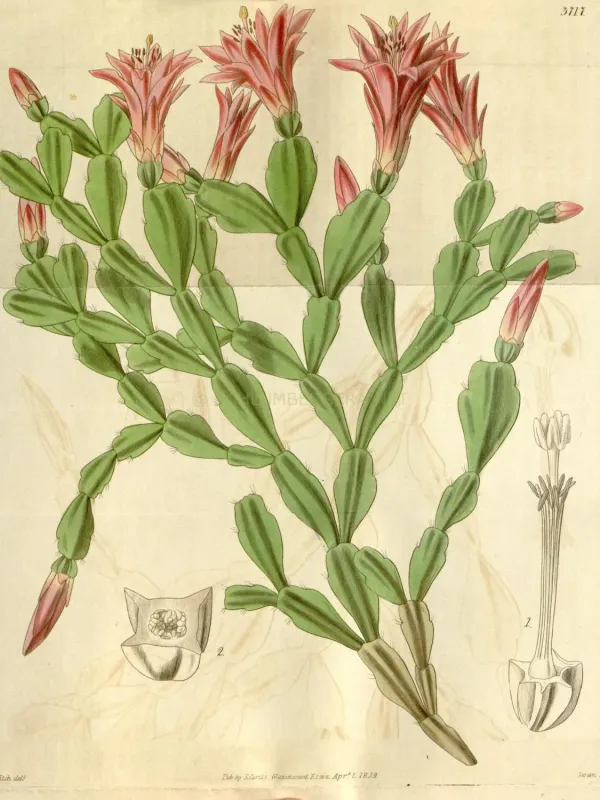
Schlumbergera russelliana is an epiphytic cactus species belonging to the Cactaceae family. It is native to the coastal mountains of southeastern Brazil, where it grows naturally in moist, shaded environments on tree branches.
The botanical structure of the plant consists of thin, flattened, and rounded segments that provide a distinct aesthetic profile. Unlike other forest cacti, its segment margins are smoother, making it a unique ornamental crop.
Successful cultivation requires a well-draining, peat-based potting mix that mimics the organic-rich environment of a forest canopy. The substrate should be kept consistently moist but never waterlogged during the active growth season.
The plant thrives under filtered light conditions. Excessive exposure to direct sunlight can cause chlorophyll degradation and reddening of the segments, reducing the plant's decorative value.
To induce flowering, the plant requires a cool period with temperatures around 15°C and shorter daylight hours during the autumn. Maintaining these environmental conditions is critical for successful bud formation and bloom longevity.
Main diseases and pests
Root rot is the most significant threat to Schlumbergera russelliana, often caused by Pythium or Phytophthora fungi in poorly aerated or waterlogged media. Proper drainage is the primary defense mechanism against these pathogens.
Mealybugs are the most persistent pests affecting this species. They hide in the segment junctions, making them difficult to detect. Early identification is crucial for effective chemical or mechanical intervention.
Spider mites can also become a problem in low-humidity environments. They cause stippling on the segments and can lead to severe tissue damage if not addressed by adjusting the humidity levels or applying acaricides.
Regular sanitation of the growing area helps minimize the risk of spreading soil-borne diseases. It is recommended to use sterilized pots and fresh soil during every repotting cycle to prevent contamination.
Monitoring the plant's turgor pressure provides early warnings for potential distress. Wilting or segment drop is often an indicator of either root system failure or significant drought stress that requires immediate corrective action.