
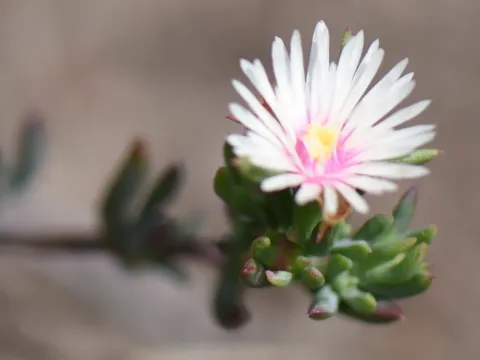
Lampranthus
Lampranthus
Lampranthus is a genus of succulent plants within the Aizoaceae family, widely recognized for its vibrant, daisy-like flowers. These plants thrive in full sun conditions, which are essential for stimulating their blooming cycle and maintaining structural integrity.
What the section contains
 Glaucous Lampranthus
Lampranthus glaucus
Glaucous Lampranthus
Lampranthus glaucus
 Lampranthus aureus
Lampranthus aureus
Lampranthus aureus
 Lampranthus blandus
Lampranthus blandus
Lampranthus blandus
 Lampranthus coccineus
Lampranthus coccineus
Lampranthus coccineus
 Lampranthus conspicuus
Lampranthus conspicuus
Lampranthus conspicuus
 Lampranthus falciformis
Lampranthus falciformis
Lampranthus falciformis
 Lampranthus glaucoides
Lampranthus glaucoides
Lampranthus glaucoides
 Lampranthus multiradiatus
Lampranthus multiradiatus
Lampranthus multiradiatus
 Lampranthus scaber
Lampranthus zeyheri
Lampranthus zeyheri
Lampranthus scaber
Lampranthus scaber
Lampranthus zeyheri
Lampranthus zeyheri
 Orange ice plant
Lampranthus aurantiacus
Orange ice plant
Lampranthus aurantiacus
Lampranthus
Native to South Africa, these succulents are naturally adapted to arid environments and nutrient-poor, rocky substrates. Successful cultivation requires mimicking these conditions by providing excellent drainage to prevent root rot.
The ideal soil profile for Lampranthus consists of a porous, sandy, or gravelly medium. The use of standard potting soil without amendments is generally avoided as it retains too much moisture for the root system.
Watering frequency should be moderate, allowing the soil to dry out completely between sessions. Excessive irrigation, especially during dormant or cool periods, is the most common cause of failure in Lampranthus cultivation.
In terms of agricultural and horticultural use, the plant is valued as an effective ground cover. It is commonly employed to prevent erosion on sunny slopes and to add aesthetic value to xeriscaping projects.
Root rot is the primary physiological threat to Lampranthus. It is almost exclusively caused by overwatering or poor drainage systems. Providing an appropriate substrate and ensuring air circulation are the best preventative measures.
Mealybugs are the most common pests that affect these succulents. They cluster in the crevices of the fleshy leaves, sucking the plant's sap. Infestations are typically managed through targeted insecticide applications.
Spider mites may become a problem in environments with low humidity and high temperatures. Monitoring for yellowing spots on the leaves or the presence of fine webbing is crucial for early detection and control.
Gastropods such as slugs and snails are a significant threat to young or tender foliage. Physical barriers or organic deterrents are often used to protect the plants during the early stages of establishment.
Effective management also involves regular inspection of the plants. By removing dead or damaged sections early, the grower can prevent the spread of opportunistic fungal infections that might compromise the entire colony.