
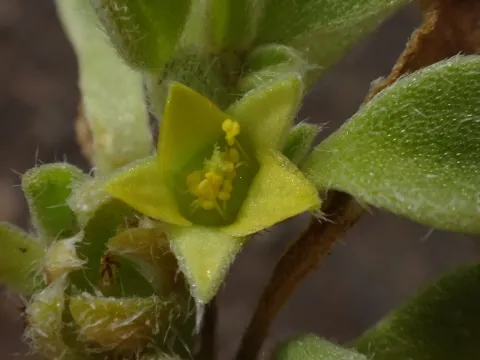
Galenia
Galenia
Galenia is a genus of perennial herbs and subshrubs belonging to the Aizoaceae family. These plants are well-adapted to arid environments and function as hardy groundcovers or low-lying shrubs.
What the section contains

Galenia
Native primarily to South Africa, Galenia species thrive in semi-desert landscapes. They have evolved specialized physiological mechanisms to maximize water use efficiency in nutrient-poor and dry soils.
The crop requires full sun exposure to flourish. Adequate light intensity is crucial for the development of the foliage and for maintaining the plant's characteristic succulent structure.
Soil requirements for Galenia focus on excellent drainage. While they can grow in sandy or rocky soils, they struggle in heavy, clay-rich substrates where water retention leads to root hypoxia.
Agronomic management is minimal due to the plant's extreme drought tolerance. It is considered a low-maintenance crop suitable for stabilizing soils in arid regions where other forage or cover crops fail.
The primary threat to Galenia cultivation is waterlogging. Excessive moisture in the root zone promotes the development of fungal pathogens, which rapidly cause root rot and systemic failure.
While the plant is naturally resistant to many pests, outbreaks of mealybugs can occur in confined or poorly ventilated growing environments. Regular monitoring is essential to prevent significant infestations.
Weed competition is a significant challenge during the establishment phase. As a relatively slow-growing plant initially, Galenia requires a clean seedbed and early intervention to ensure successful ground cover.
Soil-borne diseases such as Fusarium or Pythium can be problematic if the same land is used for long-term cultivation without proper resting or crop rotation cycles to break the pathogen life cycle.
Improper ventilation in dense plantings can lead to physiological stress and increased susceptibility to opportunistic pathogens, especially during periods of high humidity or unseasonal rainfall.