
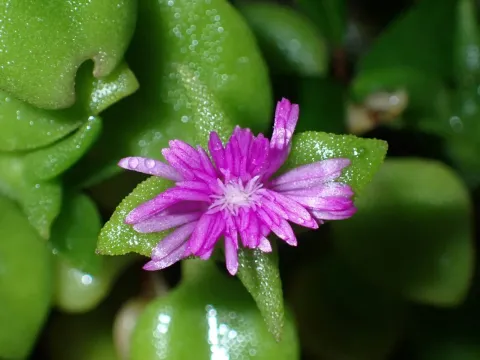
Mesembryanthemum
Mesembryanthemum L.
Mesembryanthemum seeds are very small, so they should not be buried deep in the soil during sowing, but rather pressed gently into the surface. For early flowering, the crop is usually started indoors in late March or early April.
What the section contains

Mesembryanthemum
When sowing directly into open ground, it is important to wait until stable warm weather is established, avoiding any risk of late spring frosts. The optimal temperature for seed germination is between 18 and 20 degrees Celsius.
Choosing the right location is critical: the site must be fully exposed to direct sunlight throughout the day. In shaded areas, the plant will stop blooming and tend to become leggy, losing its compact and decorative growth habit.
Prepare the soil before sowing by ensuring excellent drainage, as waterlogging is lethal to the plant's root system. A light, sandy substrate is ideal for seedlings, mimicking the natural habitat of this species.
Seedlings should be thinned or transplanted into individual pots once they develop two true leaves. When planting in the garden, maintain a spacing of 15–20 centimeters to provide adequate space for development.
Mesembryanthemum, belonging to the Aizoaceae family, is a typical succulent that requires very little moisture. The plant is extremely demanding of intense sunlight: the petals open only in bright sun, which is why it is commonly referred to as the "noon flower".
The plant prefers poor sandy or stony soils with a neutral to slightly acidic pH level. In nutrient-rich or over-fertilized soils, the plant will produce excessive foliage, which significantly reduces the quality and abundance of the flowers.
During the active growth period, watering should be moderate and carefully controlled. Excess soil moisture inevitably leads to rot in the fleshy stems and roots, making proper drainage an essential requirement for cultivation.
The ideal temperature range for successful growth is between 20 and 25 degrees Celsius. In cool and rainy summer conditions, the plant may struggle and requires protection from excessive precipitation.
Naturally occurring in the arid regions of South Africa, Mesembryanthemum adapts well to dry, well-aerated garden spots. Ensuring proper airflow around the plant is key to its health and vigor in non-native climates.
The primary threat to Mesembryanthemum is root rot, caused by persistent overwatering or stagnant water. If rot is detected, affected plants must be removed immediately to prevent the spread of the infection to healthy neighboring plants.
Among pests, the spider mite poses the greatest danger in both greenhouses and open gardens. These pests thrive in hot, dry conditions, sucking the sap from the fleshy leaves and causing them to wither prematurely.
Aphids can also damage young shoots, weakening the plant's natural immunity. To manage these pests, it is recommended to use systemic insecticides while strictly following the manufacturer’s dosage instructions.
Mealybugs are another common succulent pest, leaving a white, cotton-like residue in leaf axils. Treatment involves using rubbing alcohol or specific horticultural preparations to eliminate the infestation.
Disease prevention relies on strict moisture management and ensuring good air circulation within the planting area. Regularly inspecting the plants allows for early detection of problems and effective intervention before significant damage occurs.