
Lampranthus falciformis
Lampranthus falciformis
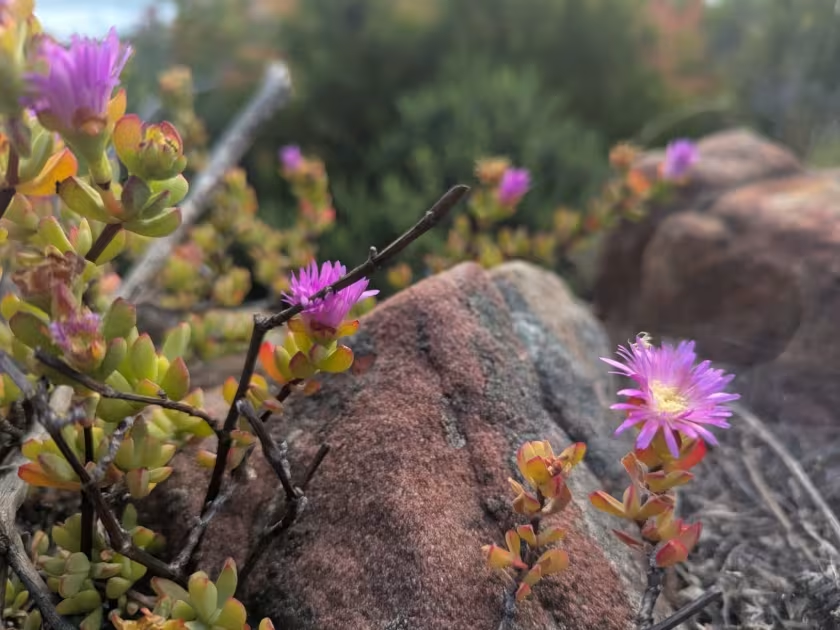
Description
Sowing dates
Lampranthus falciformis belongs to the Aizoaceae family. It is a perennial succulent subshrub that is most commonly propagated vegetatively by planting stem cuttings during the warm growing season.
In professional or hobbyist cultivation, seeds are sown in early spring as daylight hours increase. Successful seed germination requires a stable temperature range between 20 and 25 degrees Celsius.
The sowing medium should be as loose and airy as possible, consisting of a mixture of turf soil, coarse sand, and perlite in equal parts. Seeds are distributed over the moist substrate surface without covering them with a thick layer of soil.
Seed trays are covered with transparent film to create a greenhouse effect and placed in a bright location protected from direct sunlight. Regular ventilation and moderate misting help maintain the necessary humidity levels.
Once mass germination occurs, the cover is removed to provide young plants with intense light. Seedlings are transplanted into individual containers or their permanent growing site once the first pair of true leaves has developed.
Growing requirements
This species is a classic xerophyte native to the arid regions of South Africa. The plant requires maximum direct sunlight, as growing in the shade causes stems to stretch excessively and leads to poor flowering performance.
The optimal temperature range for active growth is between 22 and 28 degrees Celsius. During the winter months, the plant requires cooler conditions, around 10 to 12 degrees, to facilitate the development of floral buds.
Lampranthus is not demanding regarding soil composition, as long as there is no water stagnation in the root zone. Rocky or sandy soils with excellent drainage properties and a neutral to slightly acidic pH level are ideal.
Watering must be strictly moderate, allowing the soil to dry out completely between irrigation cycles. Excessive moisture combined with low temperatures quickly leads to root and stem base rot.
The plant is highly resistant to dry air, so misting the foliage is not required. When grown outdoors, it is essential to provide protection from hard frosts, as the species is not frost-hardy.
Main diseases and pests
The primary threat to Lampranthus is fungal diseases that develop due to waterlogged soil conditions. Root and basal rot can destroy a specimen in a very short time if irrigation management is poor.
Among pests, mealybugs cause the most significant damage; they hide in leaf axils and feed on cell sap. They are easily identified by the characteristic white, fuzzy patches on the surface of the shoots.
When grown in enclosed environments, spider mites can also become a problem, especially in conditions with stagnant, overly dry air. Systemic insecticides and acaricides are used for pest control following the manufacturer's instructions.
Disease prevention relies on strict control of substrate moisture and regular ventilation of plantings. It is important to avoid contact between leaves and moist soil, as this is a frequent entry point for secondary infections.
Regular inspection of plants allows for the early detection of localized infestations or rot. In cases of severe decay, the only method of rescue is to propagate healthy cuttings taken from the unaffected parts of the parent plant.