
Lampranthus blandus
Lampranthus blandus
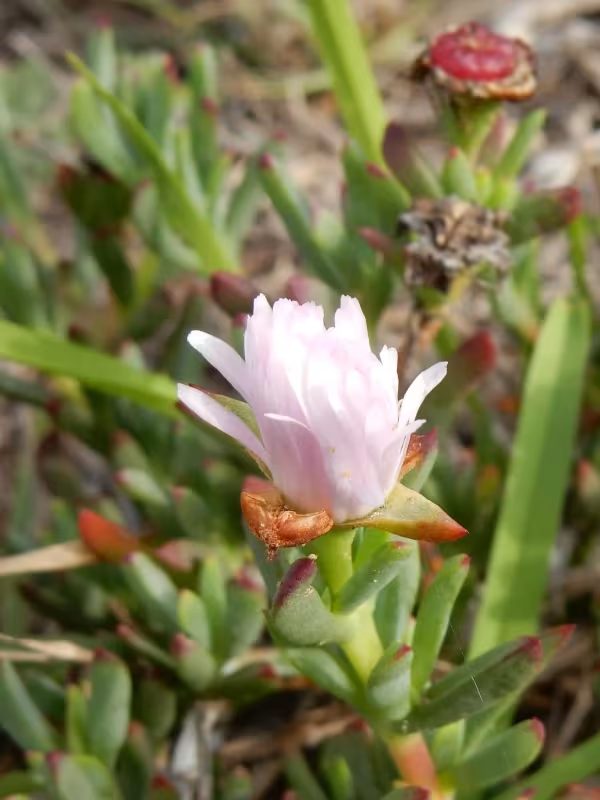
Description
Growing requirements
Lampranthus blandus is a perennial succulent belonging to the Aizoaceae family. Native to South Africa, it is well-adapted to arid environments, where it grows as a dense, low-spreading shrub with fleshy, triangular leaves.
This crop requires full sun exposure to thrive. Insufficient light results in etiolation, where the stems become weak and elongated, and the vibrant flower production, which is the plant's main feature, is significantly reduced.
The soil requirements are strict: the medium must be sandy, gritty, or rocky to ensure rapid drainage. Any water retention in the root zone for prolonged periods will likely lead to structural damage or rot.
Climate-wise, Lampranthus blandus prefers dry and warm conditions. It is not frost-hardy, so in temperate climates, it is typically managed as an ornamental container plant moved indoors or into greenhouses during winter.
Maintenance involves minimal irrigation. Watering should be sparse during the growing season and practically suspended during winter dormancy. The plant utilizes its succulent leaves to manage water storage efficiently throughout dry cycles.
Main diseases and pests
The primary threat to Lampranthus blandus is root rot, caused by overwatering or soil that lacks proper aeration. Once rot settles into the succulent stems, it is very difficult to treat successfully.
Mealybugs are the most common pests, often sheltering in the crevices between the leaves. If detected, immediate isolation of the plant and application of appropriate insecticides or alcohol-based treatments are required.
Spider mites can also become an issue, especially in environments with poor air circulation or low humidity. These pests damage the epidermis of the leaves, causing unsightly yellowing and stress to the plant.
Poor ventilation promotes the development of fungal molds on the surface of the plant. Regular monitoring of the foliage and ensuring the plants are not overcrowded are essential preventative measures.
To ensure healthy growth, focus on proper drainage, moderate fertilization with low-nitrogen formulas, and ensuring the environment mimics the natural semi-arid habitat of the species.