
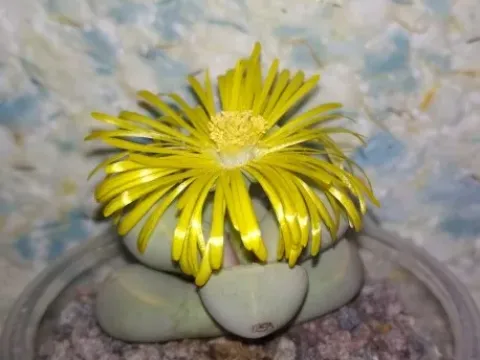
Lapidaria
Lapidaria
The sowing of Lapidaria seeds is most successful during the spring months, taking advantage of the natural increase in day length for better seedling development.
What the section contains

Lapidaria
Select a shallow, wide container with good drainage, filling it with a mineral-based substrate composed primarily of fine gravel, sand, and a small amount of peat.
Seeds should be spread evenly over the moistened surface, gently pressed into the substrate, and covered with a fine layer of grit to prevent soil displacement.
Maintain a constant temperature between 20°C and 25°C, ensuring the soil remains moist but not waterlogged until germination occurs.
Provide diffused, bright light once the seedlings emerge to ensure they grow robustly without becoming etiolated or weak during their initial stage.
Lapidaria is a genus within the Aizoaceae family that thrives in arid conditions similar to its native habitat in the rocky areas of South Africa.
This plant requires maximum sunlight exposure and should ideally be placed in a south-facing location to maintain its compact and natural growth form.
The potting medium must be inorganic and well-draining; use a mixture of pumice, perlite, and coarse sand to ensure that water never stagnates around the root zone.
Watering should be sparse, performed only during the active growing season, and strictly avoided during the winter dormancy period to prevent root rot.
Good air circulation is essential, as stagnant, humid air can lead to the rapid development of fungal pathogens on the succulent tissues.
The most significant threat to Lapidaria is overwatering, which quickly leads to the decay of the succulent leaves and the destruction of the root system.
Fungal diseases, such as various types of rots, are often triggered by high humidity levels or by debris trapped between the leaves.
Mealybugs are the most common pests, often settling in the deep crevices of the leaves where they are shielded from physical removal and topical treatments.
Spider mites may also pose a risk if the surrounding environment becomes excessively hot and dry without any refreshing air movement.
Effective management includes maintaining a clean growing area, inspecting the plants frequently, and using systemic insecticides at the first sign of infestation.